
Views: 0 Author: Site Editor Publish Time: 2026-09-10 Origin: Site


Discovering a defect after the firing process is a costly engineering failure. It wastes raw materials, expensive glaze, and massive amounts of kiln thermal energy. Manual checks on fragile unfired clay often cause the very handling damage they are meant to prevent. This leads to frustratingly high factory rejection rates. Modern facilities take a fundamentally different approach. By upgrading to a dedicated Green Body Inspection Line and utilizing specialized handling equipment, plant managers can drastically reduce defect rates. Early intervention optimizes the glazing process and directly boosts the factory bottom line.
The sanitary ware industry is rapidly transitioning toward smart manufacturing and automation. Labor shortages and strict environmental regulations are pushing plants to eliminate waste at the source. Recent industry trend analyses show that global ceramic producers are investing heavily in pre-kiln quality control to align with modern sustainability mandates. Implementing a rigorous inspection protocol long before a product reaches the kiln is no longer just an operational luxury. It is a strategic necessity for survival.
The gap between the casting and glazing stages represents the most vulnerable phase of production. Catching structural flaws during this window is vital for maintaining profitability and stabilizing production output.
In ceramic manufacturing, a green body refers to a sanitary ware product like a toilet bowl or washbasin that has been molded and dried but not yet glazed or fired. At this stage, the clay matrix has lost most of its free water through the drying process. What remains is a rigid but highly porous and fragile structure.
Because the ceramic particles have not yet fused together through vitrification, the green body is extremely susceptible to physical damage. Even slight variations in handling pressure can induce micro-cracks in the clay. Specifically, the porous nature of the unfired material makes it highly sensitive to environmental moisture and ambient dust accumulation. Any contaminant resting on the surface will inevitably interfere with the subsequent glaze application. This leads to bubbling, crawling, or pinholes during firing. Handling these delicate items requires specialized machinery designed expressly for fragile loads.
Bypassing or rushing the pre-glaze inspection process introduces severe financial liabilities to a manufacturing plant. When a defective piece proceeds down the production line, the facility incurs compounded losses.
First, the manufacturer wastes expensive glaze materials on a product that is already destined for the scrap pile. Second, the defective piece consumes valuable space and thermal energy inside the kiln. Kiln firing is by far the most energy-intensive phase of sanitary ware production. Firing a flawed toilet bowl wastes natural gas or electricity that could have been allocated to a prime-grade product. Finally, minor surface flaws at the green stage become drastically magnified after firing. A microscopic hairline crack expands under thermal stress, rendering the final product completely unusable. If caught early, that same piece could have been easily smoothed out or recycled as raw slip.
Historically, quality control in ceramic plants relied heavily on human labor. Workers were tasked with physically lifting, turning, and closely inspecting heavy clay bodies. Today, technological advancements have shifted this paradigm. Mechanical solutions now prioritize both product integrity and worker safety.
Evaluation Metric | Manual Inspection Method | Automated Semi Checking Line |
|---|---|---|
Handling Stress | High point-load pressure from human grip | Zero structural stress via pneumatic clamping |
Micro-crack Risk | Frequent due to dropping or harsh flipping | Eliminated through smooth 360-degree rotation |
Dust Removal | Inconsistent manual brushing or blowing | Integrated air knives and vacuum extraction |
Workflow Pacing | Subject to severe operator fatigue | Consistent index conveying via VFD motors |
The traditional method of manual inspection is inherently flawed due to the physical limitations of human operators. Imagine a worker at the end of a grueling shift trying to manually flip a 35-kilogram unfired one-piece toilet. To prevent dropping the awkward item, they naturally grip it tightly. This localized grip pressure frequently causes internal shear stress within the unfired clay, creating invisible micro-fractures. Transitioning away from manual handling mitigates these risks entirely. Modern equipment supports the full weight of the product. It eliminates the need for human operators to exert dangerous localized pressure on fragile ceramic walls.
The introduction of dedicated mechanical assistance fundamentally changes how inspections are conducted. Instead of wrestling with the weight of the product, inspectors focus entirely on visual and tactile quality control.
Automated inspection stations are engineered to provide smooth 360-degree rotation of the green body. Operators manipulate the position of a heavy washbasin using foot pedals or simple control panels. This brings every complex angle into clear view, including internal traps and bottom rims. Mechanical support allows inspectors to maintain a consistent distance and viewing angle. This drastically improves the detection rate of casting seam irregularities and uneven surfaces. By removing physical strain, the machinery ensures that inspection quality remains consistently high from the first hour of the shift to the very last.
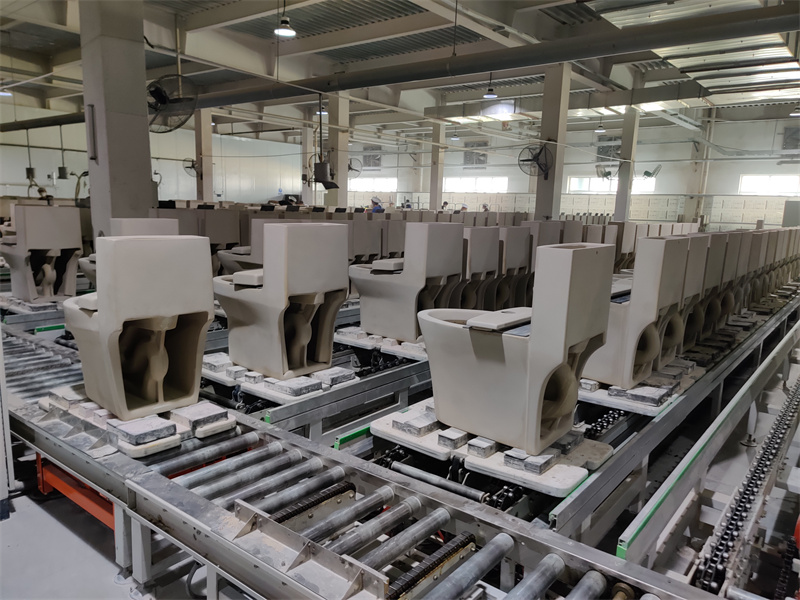
Upgrading an inspection department requires more than just adding a few conveyor belts. A true inspection circuit is a comprehensive ecosystem. It integrates mechanical and environmental controls designed to optimize flaw detection and surface preparation.
Proper illumination is the cornerstone of effective visual quality control. Standard factory overhead lighting is vastly insufficient for spotting subtle defects on raw clay. High-efficiency inspection lines utilize enclosed or semi-enclosed booths equipped with controlled LED lighting arrays.
These lighting systems are meticulously calibrated to specific color temperatures and lux levels. This creates high contrast on the clay surface. Directional and oblique lighting techniques are frequently employed to cast micro-shadows over pinholes, slight indentations, or raised casting seams. Controlling the visual environment guarantees that inspectors do not miss minute flaws that would otherwise ruin the final glazed finish.
Surface cleanliness is just as critical as structural integrity. In any ceramic factory, ambient clay dust is unavoidable. If this fine particulate settles on a green body, it acts as a barrier between the clay and the glaze. This causes the glaze to peel or flake off during the firing cycle.
To combat this, a modern inspection line incorporates integrated dust removal technologies. These setups typically utilize a combination of compressed air blowers and localized vacuum extractors. As the product rotates slowly on the inspection platform, precise nozzles blow filtered air over the surface to dislodge loose particles. Simultaneously, the vacuum system captures the airborne dust. This dual-action approach ensures the item is perfectly pristine before it moves to the glazing department.
Sanitary ware products feature complex and hard-to-reach geometries. Inspecting the underside of a toilet bowl or the mounting holes of a pedestal basin is notoriously difficult. Ergonomic turning and tilting devices serve as critical mechanical components to solve this issue.
Using pneumatic or electromechanical arms, these devices clamp the product securely. They utilize soft pressure-regulated pads that do not dent the clay. The machine then tilts the piece to the optimal viewing angle. This capability is essential for identifying cracks in hidden structural supports or ensuring that internal water channels are entirely free of clay debris.
To achieve consistent First-Pass Yield improvements, manufacturers must implement standardized checkpoints. The physical transition zone between the casting department and the glazing department serves as the ideal location for this critical quality gate.
A Semi Checking Line is a specialized conveying and inspection circuit specifically designed for semi-finished ceramic goods. It acts as the final barrier. It ensures that only structurally sound and perfectly clean green bodies are permitted to enter the finishing stages.
Unlike generic factory assembly belts, this system is tailored to the exact dimensions, weights, and fragility profiles of sanitary ware. It provides a structured environment where every single unit undergoes the same rigorous evaluation process. Integrating this dedicated line actively prevents defective products from slipping through the cracks during high-volume production runs.
Implementing a structured checking line forces a facility to standardize its quality control workflows. When products arrive at the inspection booth at a controlled pace, inspectors are naturally required to follow a specific Standard Operating Procedure.
This standardization often involves checking moisture levels with handheld digital meters. Inspectors verify structural integrity along known stress points and ensure that all casting seams have been properly sponged and smoothed. Standardizing these checks within a dedicated mechanical framework allows plant managers to accurately track defect data, identify upstream casting issues, and maintain a strict quality baseline.
The physical movement of unfired ceramics presents a unique logistical challenge. The equipment used to transport these items must be engineered with a deep understanding of material fragility. Standard industrial conveyors are entirely unsuitable for this delicate task.
A standard conveyor belt often suffers from micro-stutters, rigid transitions, and harsh vibrations caused by basic motors and rollers. For a green body, these vibrations are disastrous. Continuous rattling causes heavy items to shift, bump into one another, or develop internal stress fractures that remain invisible until firing.
Progressive factories solve this by utilizing a specialized Sanitary Ware Conveyor. These advanced transport systems are built with vibration-dampening materials and ultra-smooth transition plates between conveyor sections. Furthermore, they utilize Variable Frequency Drives to ensure soft starts and soft stops. When the conveyor begins to move or comes to a halt, the acceleration and deceleration are gradual. This prevents inertial forces from causing the heavy clay bodies to tip or crack.
Efficiency in quality control heavily depends on proper pacing. If products move too quickly, overwhelmed inspectors will inevitably miss defects. Conversely, if they move too slowly, a bottleneck forms, disrupting the entire factory output.
Specialized conveying systems utilize index conveying or stop-and-go movement. The control system is programmed to deliver a piece to the inspection booth and halt completely. This allows for a thorough 360-degree check and dust removal. The system then automatically moves the approved piece forward while simultaneously bringing in the next unit. Precise pacing ensures that inspectors have the exact amount of time required to perform their duties without feeling rushed.
The final role of the conveying system is to act as a seamless bridge to the next phase of production. Once a piece passes inspection, it must be delivered to the glazing station without any further human intervention. This applies whether the plant uses manual spray booths or advanced robotic glazing arms.
Specialized conveyors are designed to interface perfectly with downstream equipment. They ensure that items arrive at the glazing station in the exact orientation required by robotic arms. By maintaining complete mechanical control over the product from the moment it enters the inspection line until it is coated in glaze, the machinery eliminates the final variables of handling damage.
In the fiercely competitive ceramic manufacturing sector, operational expenditure optimization is a primary objective for plant managers. Discovering a defect after the product has passed through the kiln is an irreversible financial loss. Upgrading to modern machinery transforms quality control from a passive sorting task into an active cost-preservation strategy.
The financial impact of firing a defective ceramic piece is substantial. Glaze materials account for a significant portion of raw material costs. They often contain expensive frits and opacifiers like zirconium silicate. In addition, industrial tunnel kilns consume massive amounts of natural gas or electricity to reach firing temperatures exceeding 1200 degrees Celsius.
When a flawed item is glazed and fired, the manufacturer loses the raw clay, the expensive glaze, and the thermal energy used during the firing cycle. Identifying these flaws early allows factories to recycle the unfired clay by simply re-pulping it into liquid slip. This closed-loop recycling process drastically reduces material waste and lowers the overall carbon footprint of the factory.
First-Pass Yield is a critical Key Performance Indicator in sanitary ware manufacturing. It measures the percentage of products that pass through the entire production process without needing rework or ending up as scrap. A low First-Pass Yield indicates systemic inefficiencies that drain profitability.
Relying on manual inspection methods often leads to inconsistent yield rates due to human fatigue, poor lighting, and handling errors. Modern machinery standardizes the evaluation process. Catching and repairing minor defects at the green stage ensures that only structurally sound products enter the kiln. This directly elevates the yield of premium finished goods, enhancing brand reputation and profit margins.
Beyond material and energy savings, upgrading inspection equipment significantly impacts labor economics. Unfired sanitary ware is heavy and awkward to handle. Manually lifting, tilting, and rotating these pieces hundreds of times per shift exposes workers to severe musculoskeletal disorders.
Automated inspection stations utilize pneumatic or mechanical lifting arms to handle the physical burden. This ergonomic improvement reduces workplace injuries, lowers insurance premiums, and decreases employee turnover. Automating the heavy lifting allows plant managers to reallocate labor resources to higher-value tasks, optimizing overall workforce efficiency.
Selecting the right equipment requires a careful evaluation of specific production needs, product geometries, and existing infrastructure. Plant managers and procurement teams must look beyond basic functionality. They need to assess the durability, precision, and integration capabilities of the machinery based on strict engineering standards.
Sanitary ware factories rarely produce a single type of product. A production line may alternate between complex heavy items like one-piece wall-hung toilets and lighter geometries like pedestal basins. Therefore, the chosen inspection machinery must offer high levels of customization.
When evaluating equipment, verify that the clamping and rotation mechanisms are adjustable. The pneumatic grippers should be capable of securing various shapes without applying excessive pressure that could crush the fragile clay. The machinery should feature programmable logic controllers that allow operators to quickly switch between different product profiles. This ensures minimal downtime during batch changeovers.
The method used to transport unfired ceramics is just as critical as the inspection booth itself. Standard industrial conveyors generate micro-vibrations or jerky stop-and-go movements that induce invisible hairline cracks.
To prevent handling damage, factories must invest in systems that utilize ultra-smooth anti-vibration PVC belts. Ensure the drive system includes industrial-grade Variable Frequency Drives for seamless acceleration and deceleration. Index-conveying technology is vital for maintaining a steady workflow without compromising product integrity.
Ceramic manufacturing environments are inherently harsh. The air is often filled with abrasive silica dust and varying levels of humidity. Inspection machinery must be engineered to withstand these conditions over a long operational lifespan.
Prioritize equipment constructed from corrosion-resistant materials like high-grade stainless steel or heavily powder-coated alloys. Motors, sensors, and electrical panels should carry high Ingress Protection ratings to prevent dust infiltration from causing premature failure. Evaluate the after-sales support network of the manufacturer to ensure rapid availability of spare parts and comprehensive operator training.
Visual inspection is only as good as the lighting provided. High-efficiency inspection lines integrate controlled LED lighting booths that eliminate shadows and glare. Ensure the color temperature and lux levels are optimized to highlight surface irregularities, trapped air bubbles, and uneven moisture patches.
Surface cleanliness is a prerequisite for flawless glazing. The best inspection lines incorporate integrated dust removal systems. While manual compressed air blowing can sometimes push dust deeper into pores, advanced machinery utilizes a combination of gentle air knives and high-efficiency vacuum suction. This guarantees the surface is entirely free of particulate matter.
The operational gap between casting and glazing is highly vulnerable. However, it offers the greatest opportunity for cost savings in a ceramic plant. Upgrading your inspection processes will preserve capital, reduce material waste, and optimize kiln energy usage.
Implementing a modern automated inspection circuit is no longer optional for factories aiming to stay competitive. It ensures safe handling, provides superior quality control, and standardizes the workflow. Utilizing a specialized Sanitary Ware Conveyor prevents the exact handling damage that manual labor often causes. This critical step helps modern factories achieve zero-waste production goals while maximizing the output of premium products.
Evaluate your current inspection systems today. Consider reaching out to industry experts to design a custom facility upgrade tailored to your exact production needs. For high-performance, customizable inspection solutions, explore the specialized machinery options available at HXG Machine to secure your production quality.
The primary objective of this specialized line is to facilitate the safe handling, illumination, and evaluation of unfired ceramic products. At the green stage, the clay is dry but extremely fragile. The inspection line provides an ergonomic platform where trained operators can meticulously identify surface defects, casting seam irregularities, micro-cracks, and dust contamination before the costly glazing and firing processes occur.
Standard industrial conveyors are built for robust packaging or metal parts. They often suffer from jerky movements and mechanical vibrations. In contrast, a conveyor designed for sanitary ware is engineered specifically for highly fragile unfired clay bodies. It incorporates anti-vibration technology, ultra-smooth belt transitions, and Variable Frequency Drive motors for precise speed regulation. This completely eliminates structural shocks during factory transport.
During the semi-checking phase, inspectors primarily look for structural and surface anomalies that occur during the slip casting and drying processes. The most common defects include irregularities or sharpness along the casting seams, pinholes caused by trapped air bubbles in the slip, micro-cracks resulting from uneven shrinkage, and residual clay dust that could prevent the glaze from adhering properly.
While advanced machinery heavily automates the physical handling of the product—such as lifting, 360-degree turning, dust removal, and precise conveying—the actual visual identification of defects still largely relies on the trained eye of human operators. The machinery serves to make the job of the human inspector infinitely safer, more ergonomic, and highly accurate by providing the perfect environment for flaw detection.
Automated inspection eliminates the handling damage typically caused by manual lifting and flipping. By utilizing pneumatic clamps and smooth rotation, the machinery prevents new micro-cracks from forming during the quality check. Furthermore, controlled lighting and index conveying ensure inspectors have the optimal environment and time to catch existing flaws. Repairing these flaws before glazing directly increases the percentage of defect-free products exiting the kiln, thereby boosting the First-Pass Yield.
The Return on Investment is highly documented in the ceramic industry and is typically achieved rapidly. By detecting a defect at the green stage, the unfired clay can be re-pulped and reused, resulting in near-zero material loss. If a defective piece bypasses inspection and proceeds to the kiln, the manufacturer loses the cost of the raw clay, the expensive chemical glaze, and the massive amount of natural gas required for high-temperature firing. The energy and glaze savings alone often offset the machinery cost within the first few operational quarters.


