
Views: 0 Author: Site Editor Publish Time: 2026-09-09 Origin: Site


Walk onto any traditional factory floor. The environmental challenges hit you immediately. Heavy humidity hangs in the air. Sprawling drying racks eat up valuable floor space. Kilns hum constantly in the background. Scaling a ceramic plant under these conditions requires absolute precision. Buy undersized machinery, and downstream processes starve for greenware. Overcapitalize on massive equipment, and you bleed cash through idle downtime.
Plant managers and procurement directors must pinpoint this exact operational sweet spot. This is where partnering with a specialized ceramic machine manufacturer transforms a standard vendor transaction into a massive engineering advantage. A true manufacturing partner does not just hand you a catalog. They analyze your specific slip rheology, measure your spatial constraints, and evaluate your product complexity to architect a highly tailored solution.
In this comprehensive guide, we break down the exact methodology for matching your factory throughput goals to the right machinery. From conducting baseline floor audits to integrating advanced automated systems, you will learn how to sustainably scale operations without compromising the structural integrity of your ceramic products.
Before diving into equipment specifications, we must understand the macroeconomic forces driving modern capacity upgrades. Recent market analyses reveal a definitive pivot in how ceramic facilities scale. Historically, increasing capacity meant pouring new concrete and expanding the physical building. Today, that approach is financially unviable.
Driven by volatile global energy costs and severe shortages in skilled manual labor, plant directors are prioritizing throughput density. The goal is to produce more units per square meter. Modern facilities are aggressively adopting data-driven retrofits. They are replacing labor-intensive battery casting lines with automated, high-pressure systems. This shift fundamentally maximizes existing floor space, drastically lowers the carbon footprint per unit, and insulates the business from unpredictable labor markets. Aligning your equipment selection with these trends ensures your facility remains competitive for the next decade.
Data-Driven Capacity Auditing: Accurate equipment matching begins with a rigorous analysis of your current cycle times, defect rates, and future market projections.
Strategic Customization: Top-tier engineering partners deliver modular solutions rather than rigid, off-the-shelf machinery. This ensures absolute alignment with your specific factory layout.
Technological Advancement: Implementing high-pressure technology fundamentally alters plant physics. It drastically reduces casting cycle times and minimizes the required factory footprint.
Sanitaryware Specificity: Complex products demand highly targeted machinery. Specialized multi-axis clamping systems ensure intricate internal geometries meet stringent quality standards.
System Integration: Modern production scaling relies heavily on the seamless integration of smart sensors, real-time monitoring, and automated robotic material handling.
Buyers must first establish a crystal-clear, data-backed understanding of their current operational friction points. Purchasing decisions based on rough estimations frequently lead to misaligned capital expenditure. You need hard data.
Never request a vendor quote without executing a rigorous baseline audit first. Walk the floor. Identify the exact physical bottlenecks across the slip casting, drying, and firing stages. In most legacy plants, the primary constraint suffocating growth lies in the slip casting phase. Here, thousands of plaster molds dictate a painfully slow, rigid daily rhythm.
Operators must meticulously calculate the current daily yield against the theoretical maximum capacity of the facility. Track your Overall Equipment Effectiveness, commonly known as OEE. This metric factors in machine availability, performance speed, and product quality. Quantify your micro-stoppages, defect rates, and manual handling delays. By doing so, procurement teams can pinpoint exactly where an injection of advanced technology will provide the highest operational leverage.
Capacity matching is rarely just about solving the immediate headaches of today. It requires projecting production needs over a three-to-five-year horizon. Plant directors should cross-reference historical sales data with anticipated seasonal demand spikes. Factor in the planned rollout of new, complex product lines.
If global market demand projects a 30 percent increase in sanitaryware volume over the next two years, the chosen machinery must possess the inherent modularity to scale seamlessly. Over-purchasing leads to rapid depreciation of unused assets. Under-purchasing stunts market capture. Accurate, data-backed forecasting forms the mathematical bedrock for selecting the correct machinery scale.
The vendor you select plays an outsized role in the success or failure of your capacity expansion. The dynamic between a factory and its equipment provider must extend far beyond the loading dock.
A reliable equipment manufacturer acts as a strategic engineering consultant. They do not push a standardized machine. Instead, they initiate the relationship by conducting digital plant layout simulations. They analyze your specific slip rheology, testing the unique flow behavior and water content of your ceramic suspension.
By analyzing the exact physical and chemical properties of your raw materials, a consultative manufacturer recommends the precise pressure settings and automation levels required. This ensures you hit your target output sustainably, without excessive wear on the hydraulic components.
Integrating new, high-speed machinery requires meticulous spatial choreography. A specialized partner assists in redesigning the factory floor to eliminate wasted movement. If heavy, fragile greenware must travel hundreds of feet across an uneven floor to reach the drying kilns, the speed advantages of a new casting machine are instantly negated.
Furthermore, the manufacturer ensures your facility's underlying utility infrastructure strictly aligns with the new equipment demands. They evaluate compressed air reserves, high-pressure water lines, and electrical load capacities. This customized layout engineering ensures a fluid operational workflow, drastically reducing labor fatigue and preventing logistical logjams.
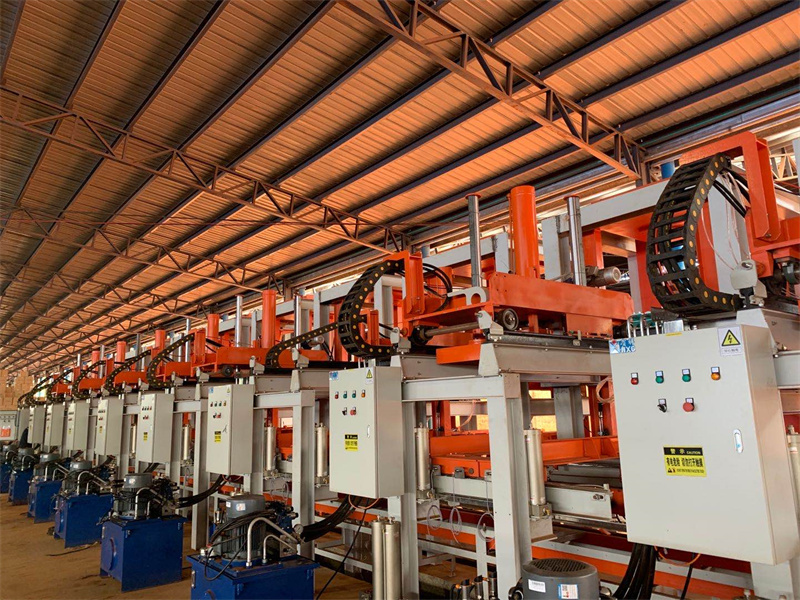
The ceramic manufacturing sector spans a massive spectrum. It ranges from boutique architectural tile studios to sprawling sanitaryware conglomerates. Selecting the appropriate machinery requires matching the core design philosophy of the equipment to your specific volume tier.
To make an informed decision, plant engineers must compare the raw operational metrics. Below is a core comparison table detailing the performance shift when upgrading equipment.
Operational Metric | Traditional Plaster Casting | Advanced High-Pressure Casting |
|---|---|---|
Casting Pressure | Passive Capillary Action | 10 to 15 Bar Mechanical Pressure |
Mold Lifespan | 80 to 100 Cycles | 30,000 to 40,000 Cycles |
Daily Output Per Mold | 1 to 2 Casts | Multiple Casts Per Hour |
Floor Space Requirement | Massive sprawling benches | Compact, high-density vertical units |
Green Body Moisture | High, requires long thermal drying | Low, ready for rapid downstream processing |
For specialized architectural ceramics producers or facilities testing experimental product lines, operational flexibility often outweighs raw throughput speed. In these scenarios, modular systems prove highly effective. They balance manual craftsmanship with semi-automated casting benches.
Operators can swap out molds frequently without triggering extensive downtime. This makes modular setups the ideal choice for high-mix, low-volume production strategies. The equipment demands a lower initial capital investment while preserving a clear upgrade path as market demand solidifies.
Facilities targeting mass-market distribution must decisively transition away from traditional battery casting. High-volume output demands equipment engineered for relentless, continuous operation with absolute minimal human intervention.
In these high-density environments, investing in scalable Ceramic Production Equipment is non-negotiable. Automated guided vehicles silently transport raw materials. Six-axis robotic arms handle the delicate tasks of demolding, edge fettling, and glazing. This synchronized flow ensures the massive output generated by the casting machines is never bottlenecked by manual processing downstream.
When traditional plaster mold casting reaches its absolute physical and spatial limits, high-pressure technology becomes the mandatory next step. This technology fundamentally rewrites the physics of ceramic forming.
In legacy operations, capillary action slowly draws water into a porous plaster mold at an unhurried rate. Transitioning to a modern High Pressure Casting Machine abruptly shifts this paradigm. These advanced systems inject ceramic slip into specialized micro-porous resin molds under intense pressure, operating strictly between 10 to 15 bar.
This immense applied pressure mechanically forces the water out of the slip and through the microscopic pores of the resin at an exponentially accelerated rate. By relying on brute mechanical force rather than passive capillary action, the ceramic body forms in a fraction of the time. The ultimate result is a denser, structurally superior green body. It contains significantly lower moisture, which inherently maximizes the yield of defect-free products entering the kiln.
The most objective metric for evaluating this technology is the drastic contraction of cycle times. Traditional plaster molds permit only one to two casts per day, crippled by the lengthy thermal drying time required for the plaster to recover. In stark contrast, a high-pressure system effortlessly executes multiple casts per hour from a single mold.
This rapid turnover shrinks the physical footprint required to achieve a specific production quota. A single high-pressure unit often replaces dozens of sprawling traditional casting benches. Factories multiply their overall capacity without pouring new concrete for building expansions. Additionally, because resin molds utilize compressed air to clear their pores rather than requiring massive thermal drying rooms, downstream energy consumption plummets.
Sanitaryware represents one of the most complex fluid dynamics challenges in industrial manufacturing. Matching capacity in this highly specific sector requires specialized engineering due to the intricate, hidden geometries of the final products.
Standard flatware or simple basin casting machines fail spectacularly when attempting to accommodate complex internal siphonic traps, flushing channels, and closed rims. These intricate features necessitate multi-part molds that must align with microscopic precision. If the clamping pressure is even slightly uneven, or if the slip fails to flow uniformly into the hidden cavities, the resulting micro-fractures will cause the toilet to shatter during the firing process.
To meet these exact demands at a mass-market scale, facilities deploy a specialized Water Closet HPCM. These dedicated units are heavily engineered with multi-axis hydraulic clamping systems. They are capable of securing 4-part to 7-part resin molds under extreme pressure without a single drop of leakage.
When calculating the true capacity of these machines, factory engineers evaluate the number of complex molds the unit can operate concurrently. They match this against the specific dewatering time of the sanitaryware slip. A perfectly calibrated machine guarantees the hourly output of green bodies seamlessly matches the subsequent capacity of the tunnel kilns. This prevents a fragile backlog of unfired toilets from cluttering the factory floor.
In the contemporary manufacturing landscape, matching equipment to capacity is deeply intertwined with software architecture, data analytics, and robotic automation.
State-of-the-art ceramic machinery is heavily embedded with Industrial Internet of Things technology. Precision sensors continuously monitor critical variables in real-time. They track slip temperature, injection pressure curves, mold clamping force, and precise cycle durations.
This stream of data feeds directly into centralized Supervisory Control and Data Acquisition systems. By actively monitoring these dashboards, plant managers detect micro-inefficiencies before they compound into massive capacity losses. A slight drop in hydraulic pressure triggers an alert. Predictive maintenance algorithms notify crews to replace wearing seals during planned shifts, effectively eradicating unplanned downtime.
Dramatically increasing casting speed inevitably creates a secondary bottleneck. The physical handling of the output becomes the new constraint. If a high-pressure machine casts a heavy toilet every 20 minutes, but the facility relies on exhausted manual labor to demold and transport the wet clay, the theoretical capacity of the machine is never realized.
Modern capacity matching synchronizes machine speed with automated robotic handling. Industrial robotic arms apply consistent, gentle force to extract fragile green bodies from the molds. They perform preliminary edge smoothing and carefully place the pieces onto automated drying conveyors. This eliminates human-induced handling defects. The accelerated casting speed translates directly into increased net yield.
Procurement decisions in the heavy ceramics industry should never be dictated by the initial price tag alone. Upgrading to capacity-matched machinery requires a comprehensive financial evaluation.
Entry-level machinery may present a highly attractive upfront Capital Expenditure. However, it routinely fails to deliver the sustained, reliable output required for aggressive capacity scaling. Procurement teams must evaluate the Total Cost of Ownership over a rigorous 5-to-10-year horizon.
Premium equipment engineered by a specialized manufacturer fundamentally alters the Operational Expenditure profile of the plant. Accelerated cycle times mean vastly more products are manufactured per shift. This directly drives down the fixed overhead cost per unit. Furthermore, the sheer precision of high-pressure systems drastically lowers the rejection rate at the kiln. Since firing consumes the vast majority of plant energy, preventing defective pieces from ever entering the kiln yields massive long-term financial savings.
An accurate cost calculation heavily weights the ongoing consumables required to sustain production. In legacy setups, plaster molds are a relentless, recurring expense. They degrade rapidly after just 80 to 100 uses. This necessitates a dedicated mold-making department and frequent production halts for swap-outs.
In contrast, the micro-porous resin molds utilized in high-pressure systems boast an astonishing lifespan of 30,000 to 40,000 cycles. The initial CNC milling of a resin mold is more expensive. Yet, the cost-per-cast drops exponentially over its working life. By accurately forecasting these operational variables, plant directors map out a Return on Investment timeline. Historically, this falls between an impressive 18 to 36 months for well-integrated installations.
Matching your equipment to your actual production capacity is a highly strategic, mathematical calculation. It demands an intimate understanding of your current floor limitations and future market goals. From conducting that initial baseline audit to evaluating the nuances of slip rheology, every single step in the evaluation process matters.
Stepping away from legacy systems and upgrading to modern, data-driven solutions allows manufacturers to exponentially increase daily throughput. You elevate rigorous quality control standards while shrinking your physical footprint. The transition from capillary plaster casting to high-pressure resin technology represents a fundamental leap in industrial capability.
Stop fighting daily bottlenecks and start scaling your production efficiently. Evaluate your specific capacity requirements and explore tailored, high-performance machinery at HXG Machine. Contact an experienced, industry-leading engineering team today to schedule a comprehensive capacity audit, and discover the exact equipment architecture required to future-proof your plant.
Production capacity is calculated by evaluating three primary variables. You must measure the mechanical cycle time of the machine, the exact number of mold cavities it operates simultaneously, and the total active working hours per shift. Slip rheology heavily influences the dewatering speed. A reputable manufacturer conducts physical material testing on your specific slip mixture to provide a highly accurate output matrix.
Cycle time is primarily dictated by the applied casting pressure, the porosity of the mold material, and the specific viscosity and water content of the ceramic slip. High-pressure systems operating at 10 to 15 bar force water through micro-porous resin molds rapidly, reducing cycle times from hours to mere minutes compared to traditional plaster methods.
By executing multiple casts per hour from a single mold, a high-pressure system drastically condenses production. A single multi-mold high-pressure machine can often replace 20 to 30 traditional plaster casting benches. This allows factories to increase output by up to 300 percent within the exact same physical building footprint.
Ceramic manufacturing involves highly abrasive processes. The slip is heavy, moisture-laden, and highly corrosive to standard mechanical components. A specialized manufacturer intimately understands the nuances of managing slip rheology and mold porosity. They engineer equipment using anti-corrosive materials and specialized hydraulics built specifically to withstand this harsh environment.
Yes, retrofitting is a standard industry practice. Dedicated high-pressure systems can be seamlessly integrated into existing plants to instantly boost capacity. The integration process requires a thorough audit of your current utility infrastructure, ensuring compressed air systems, high-pressure slip lines, and water filtration networks can comfortably meet the new demands.
Industrial data indicates that modernizing plants achieve a full return on investment within 18 to 36 months. This rapid ROI is driven by the dramatic reduction in casting cycle times and decreased reliance on manual labor. Heavily reduced energy consumption for mold drying and the vastly extended lifespan of resin molds further accelerate the financial return.


