
Views: 0 Author: Site Editor Publish Time: 2026-09-12 Origin: Site


Have you ever walked a factory floor slick with wasted clay? It is a common nightmare in the ceramic manufacturing sector. Producing flawless toilets, washbasins, and bidets relies entirely on a seamless, uninterrupted workflow. Minor slip defects during the fluid transfer stage can trigger catastrophic casting failures down the line. Many traditional plants struggle with inconsistent liquid clay transitions. This inevitably ruins product quality, leads to massive material waste, and bottlenecks entire production schedules.
Modern sanitary ware machinery acts as the crucial bridge to solve these exact pain points. By utilizing advanced pumps, intelligent piping networks, and highly specialized storage tanks, these integrated systems ensure the slip remains in pristine condition as it travels from the preparation phase directly into the molds. In this comprehensive guide, we will explore the vital engineering connection from preparation to casting and how upgrading your infrastructure can drastically improve your bottom line.
The connection between preparation and casting requires strict, automated control. We have summarized the core principles of this transition below.
Process Focus | Engineering Objective | Machinery Used |
|---|---|---|
Slip Integration | Ensure a continuous, automated fluid flow without stagnation. | Ring main piping and automated pneumatic valves. |
Slip Storage | Prevent particle settling and maintain exact fluid pressure. | Pressure Slip Supply Tank. |
Quality Control | Prevent air bubble entrapment and unwanted viscosity changes. | Mechanical agitators and vacuum de-airing systems. |
Efficiency | Reduce manual labor costs and minimize raw material waste. | Programmable Logic Controllers and Variable Frequency Drives. |
Industry data shows a massive shift toward automated fluid handling across global ceramic hubs. Driven by stringent sustainability mandates, rising energy costs, and skilled labor shortages, manufacturers are aggressively phasing out manual pouring. The modern factory demands closed-loop, data-driven transfer systems. This transition underscores the absolute necessity for flawless, machine-regulated slip delivery right from the initial mixing stage.
Before any connection can happen, raw materials must undergo rigorous processing. Factories must transform solid, unrefined minerals into a high-quality, perfectly homogeneous liquid slip. This foundational stage dictates the success of the entire production line. Any chemical or physical imbalance here will be magnified during the firing process.
Engineers begin the formulation with specific ratios of raw clay, feldspar, quartz, and water. These raw ingredients are fed into massive industrial mixing tanks, where the blunging process aggressively breaks down the raw clay chunks. Subsequently, industrial milling grinds the harder silicates into microscopic particles, creating a highly stable liquid mixture. During this phase, operators meticulously monitor the specific gravity. Target densities must sit precisely around 1.8 grams per cubic centimeter. If this delicate mix is off by even a fraction, the final ceramic body will suffer from severe structural failures.
Once properly mixed, the slip is still not ready for the casting floor. It inevitably contains unwanted impurities and oversized organic particles. To combat this, modern Slip Preparation Equipment utilizes multi-deck vibrating sieves to mechanically filter out oversized particles from the liquid clay. Following this, the slip passes through powerful magnetic separators in a crucial de-ironing step. Tiny magnetic iron particles will oxidize in the kiln and cause unsightly brown spots on the fired ceramic glaze if left unchecked. Removing them ensures a smooth, defect-free surface finish. Once the slip is perfectly refined, it cannot simply sit stagnant. It must be mobilized efficiently to the next manufacturing stage.
Moving liquid clay presents a unique set of physical challenges compared to pumping plain water or oil. Slip is heavy, dense, and highly abrasive to standard industrial plumbing. Handling its unique rheological properties requires specialized machinery engineered specifically for safe, continuous transfer.
Ceramic slip exhibits a fascinating fluid property known as thixotropy. This means its viscosity actively changes based on kinetic movement. When slip is agitated or pumped, it flows easily like a standard liquid. However, when it sits still, it rapidly thickens and begins to gel. Consequently, slip must be kept in constant motion. If the flow stops, heavier particles will separate and aggressively clog the piping network. To prevent this hardening, engineers deploy continuous circulation loops. This ensures that a consistent fluid density is maintained right up to the point of mold filling.
In addition, air bubbles are a massive, often invisible threat to sanitary ware production. Improperly sealed pumps and cavitating valves can accidentally whip air into the fluid during transfer. These trapped micro-bubbles travel seamlessly into the casting molds. Once the piece is fired in the kiln, these bubbles expand and turn into surface pinholes or internal structural weak points. This leads to entire batches of rejected washbasins. Therefore, transfer machinery must operate within a strictly closed, airtight loop. Vacuum de-airing systems are frequently integrated to extract any trapped gases before they reach the casting floor.
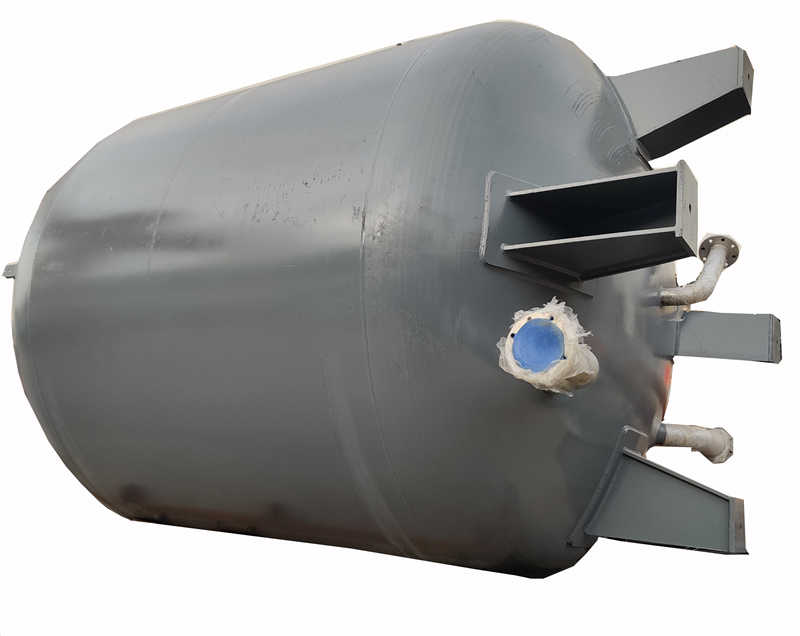
This holding vessel acts as the definitive missing link within the factory architecture. Bridging the gap between the preparation area and the casting molds, the Pressure Slip Supply Tank is a highly specialized piece of equipment. It is arguably the most important intermediary asset for maintaining material integrity.
High-volume production lines require massive reserves of ready-to-use slip. The supply tank stores this fluid safely until the exact moment it is needed. However, it is far from a static holding vessel. Inside the stainless-steel tank, slow-moving mechanical agitators rotate continuously. These precisely engineered paddles keep the clay mixture perfectly homogeneous. They actively prevent heavier quartz and feldspar particles from sinking to the bottom. The agitation speed is a delicate balance. Too fast, and the paddles might whip unwanted air into the mixture. Too slow, and the thixotropic slip will begin to settle and gel.
Casting machines cannot simply pull slip from a stagnant pool. The fluid must be actively pushed into the molds. To achieve this, the tank utilizes compressed air or specialized delivery pumps to force the slip out at a highly controlled, unwavering pressure. For example, industrial-grade supply tanks engineered for high-pressure casting typically maintain working pressures up to 15 bar and feature robust 304 or 316 stainless steel construction to withstand continuous abrasive wear. Consistent feed pressure is an absolute prerequisite for modern automated lines. Pressure sensors constantly monitor the output flow rate, communicating in real-time with the central control system. If the pressure drops even slightly, the molds will fail to fill completely, resulting in deformed rims or thin walls.
How does the abrasive slip physically travel across expansive factory floors? It moves from the supply tank to the casting benches via sophisticated piping networks powered by intelligent pump systems designed to withstand extreme wear.
Standard centrifugal water pumps fail catastrophically when introduced to ceramic slip. The high concentration of quartz and sand acts like liquid sandpaper. This destroys standard impellers and mechanical seals within a matter of days. Instead, modern facilities rely on heavy-duty pneumatic diaphragm pumps. These specialized pumps handle abrasive, high-density fluids effortlessly. They utilize thick elastomer diaphragms to provide smooth, pulse-free delivery to the casting lines without grinding the fluid.
Pump Type | Abrasion Resistance | Pressure Control | Maintenance Needs |
|---|---|---|---|
Diaphragm Pump | Excellent | Very High | Low |
Centrifugal Pump | Poor | Moderate | High |
Piston Pump | Good | High | Moderate |
Because slip cannot sit dead in a straight pipe, factories engineer closed-loop piping systems known as ring mains. The slip continuously circulates past the casting machines. Whatever volume is not immediately used returns directly to the supply tank. This constant motion ensures the slip never stagnates. Furthermore, automated pneumatic pinch valves govern access to the individual molds. When a specific mold requires slip, the valve opens with pinpoint precision. Once the cavity is filled, the valve snaps shut, and the mainline circulation continues uninterrupted. This prevents dangerous pressure surges within the plumbing.
The final destination of this carefully orchestrated fluid transfer is the forming stage. This is the exact moment where liquid clay physically transitions into a solid, recognizable ceramic body. How the Casting Equipment receives the pressurized slip ultimately dictates the structural integrity, surface finish, and dimensional accuracy of the final sanitary ware product.
High-Pressure Casting represents the cutting-edge standard for high-volume, precision manufacturing. Unlike traditional methods, this process utilizes porous polymer resin molds rather than standard plaster. The core mechanism relies on forcing the slip into the mold cavity under immense pressure, typically ranging from 10 to 15 bar. This rapidly squeezes water out through the microscopic pores of the resin.
For this advanced process to succeed, the slip must arrive with absolute consistency. Surges or sudden drops in pressure during the injection phase will instantly result in uneven wall thickness, internal stress fractures, or incomplete mold filling. The supply systems must maintain a continuous, unyielding force. Advanced insulated piping ensures the slip enters the machines at an optimal thermal baseline, standardizing the dewatering time and maximizing the machine's daily output cycles.
While high-pressure automation is the gold standard for new factory installations, traditional battery casting lines utilizing plaster molds remain highly prevalent. This is particularly true for complex, oversized, or custom sanitary ware geometries. In this traditional method, water is drawn from the slip via the natural capillary absorption of the dry plaster.
Although traditional casting does not require extreme injection pressures, it demands an exceptionally steady, low-velocity flow. If the slip is introduced into the plaster molds too aggressively, it causes a critical defect known as washing. The turbulent flow erodes the inner surface of the forming clay body. Automated valve controls and ring main piping are indispensable here. They circulate the slip gently past the casting benches, ensuring that the first and last molds on the battery line receive material of identical viscosity.
To better understand the distinct requirements of these two methodologies, the following table outlines the operational parameters that integrated machinery must expertly manage:
Parameter | High-Pressure Casting | Traditional Battery Casting |
|---|---|---|
Mold Material | Porous Polymer Resin | Plaster of Paris |
Delivery Pressure | High typically 10 to 15 Bar | Low gravity feed or under 1 Bar |
Dewatering Mechanism | Mechanical Pressure | Capillary Action and Absorption |
Flow Characteristic | Rapid, high-force injection | Slow, gentle, steady fill |
Risk of Poor Integration | Mold damage, internal stress cracks | Washing defects, uneven walls |
For plant managers and procurement engineers, upgrading the connection between preparation and molding is rarely just about technical elegance. It is a calculated financial strategy. Investing in fully integrated machinery yields measurable returns on investment by systematically eliminating the most significant cost drivers in ceramic production. These include material waste, labor inefficiencies, and excessive energy consumption.
In ceramic manufacturing, the financial cost of a defect compounds exponentially the further the product moves down the production line. Discovering a pinhole, a warpage issue, or a micro-crack after a toilet has been glazed and kiln-fired represents a total loss of raw materials, labor, and significant thermal energy. The vast majority of these structural defects originate during the slip preparation and casting transfer phases.
By utilizing a closed-loop, pressure-regulated delivery system, manufacturers effectively eliminate these volatile variables. The slip remains in a state of controlled agitation, preserving a constant density and rheology. This rigorous standardization directly translates to higher first-pass yield rates. Predictable slip behavior ensures uniform wall thicknesses and a drastic reduction in rejected pieces at the final quality control checkpoint.
Historically, managing the transfer of slip required intense manual oversight. Floor operators had to constantly monitor tank levels, manually adjust mechanical valves to control pressure, and frequently dismantle clogged pipelines caused by settled clay. This heavy reliance on manual intervention is both labor-intensive and highly prone to human error.
In contrast, modern integrated systems utilize Programmable Logic Controllers and SCADA networks to automate the entire transfer process invisibly. Sensors continuously track fluid levels, pressure metrics, and flow rates. Furthermore, energy consumption is drastically optimized through the use of Variable Frequency Drives on the heavy-duty slurry pumps. Instead of running pumps at full capacity and choking the flow with mechanical valves, Variable Frequency Drives adjust the electrical frequency supplied to the motor. This matches the exact real-time demand of the casting floor. Precision control slashes electricity bills and extends the mechanical lifespan of the pump components.
For procurement teams looking to modernize their facilities, selecting the right intermediary machinery requires meticulous technical evaluation. The ultimate goal is to create a seamless, bottleneck-free environment. This is a critical purchasing decision where software integration, material science, and system compatibility must take precedence over basic functionality.
The most crucial factor when upgrading is ensuring that the new components can communicate flawlessly with your existing infrastructure. A state-of-the-art supply tank is functionally useless if its control panel cannot synchronize with the logic controllers governing your upstream mixers and downstream casting lines.
When evaluating new assets, you must verify that your equipment can seamlessly integrate via standard industrial communication protocols like Modbus, Profinet, or Ethernet IP. The supply tank must automatically send ready signals to the casting machines while simultaneously triggering demand signals to the preparation area when fluid levels drop. Working with machinery providers who offer customizable, digitally integrated engineering solutions is highly recommended for established plants looking to scale.
Because ceramic slip is inherently abrasive, the metallurgical composition of your machinery is a primary indicator of its long-term viability. Standard carbon steel is entirely insufficient for these applications due to rapid wear and the severe risk of iron contamination. Rust spots on fired ceramics are a direct result of poor material selection.
Plant engineers should specify machinery constructed exclusively from high-grade 304 or 316 stainless steel in all fluid contact areas. For the most punishing applications, investing in equipment lined with industrial polyurethane or wear-resistant alloys is a prudent choice. Additionally, maintenance accessibility is paramount. Machinery should feature clean-in-place capabilities and quick-release access ports, allowing maintenance crews to perform routine checks swiftly without dismantling large sections of the production line.
To assist in the procurement process, engineers should evaluate potential machinery upgrades against the following strict criteria:
Component | Key Specifications to Verify |
|---|---|
Slurry Pumps | Variable Frequency Drive compatibility, abrasive-resistant elastomer linings, optimal flow rate capacity. |
Pressure Tanks | Stainless steel construction, slow-speed agitator torque, automated pressure relief valves. |
Piping & Valves | Minimum dead-legs to prevent settling, pneumatic pinch valves, hygienic flange connections. |
Control Systems | Integration protocols, real-time pressure sensors, automated alarm triggers. |
The journey of liquid clay through a manufacturing plant is a highly delicate process. The physical connection between preparation and casting is precisely where product quality is either preserved or permanently lost. Relying on outdated manual transfer methods or incompatible pumping systems guarantees inconsistent yields and inflated operational costs.
By investing in robust supply tanks, heavy-duty automated pumping systems, and intelligent closed-loop piping, manufacturers can achieve flawless integration. Upgrading your sanitary ware machinery to bridge this gap eliminates human error, protects the structural integrity of the slip, and transforms a disjointed factory floor into a highly efficient, high-yield production powerhouse.
Ready to eliminate casting defects and optimize your factory floor? Explore high-performance solutions and upgrade your infrastructure today. Visit HXG Machine to find the exact equipment tailored to your production needs.
It acts as a critical buffer and delivery system within the production line. It stores large volumes of the prepared slip, utilizes slow-moving agitators to keep the fluid in constant motion preventing particle settling, and supplies the liquid to the casting machines at a constant, highly controlled pressure. This ensures the molds receive a uniform material without interruption.
If the slip is poorly mixed, contains unrefined impurities, or suffers from fluctuating viscosity due to outdated machinery, it will inevitably clog the downstream piping systems. During the casting phase, these inconsistencies manifest as severe product defects. These include weak structural walls, warped geometries, or pin-holed surfaces that render the fired ceramic product completely unsellable.
Yes, retrofitting is highly feasible and common. Modern supply systems, including advanced slurry pumps and pressure tanks, can be equipped with Variable Frequency Drives and programmable logic controllers. These smart technologies allow the new machinery to scale down its pressure and flow rates to safely feed traditional plaster mold battery casting lines, while retaining the heavy-duty capacity to supply modern high-pressure systems in the future.
Precise pressure control directly dictates the physical formation of the ceramic body inside the mold. If the delivery pressure is too low, the molds will not fill completely, resulting in thin, fragile, or incomplete products. Conversely, if the pressure is too high or experiences sudden violent surges, it can physically rupture the resin molds, cause uneven wall thickness, and introduce severe internal stress fractures in the sanitary ware.
Preventing settlement requires a combination of continuous kinetic movement and proper pipeline engineering. Factories must utilize closed-loop ring main piping systems where slip is constantly circulated back to the supply tank. Additionally, eliminating dead-legs in the plumbing and using slow-speed mechanical agitators in the storage tanks ensures the heavier quartz and feldspar particles remain suspended in the mixture.
The ideal pressure for modern high-pressure casting typically ranges between 10 to 15 bar, depending on the specific geometry of the sanitary ware and the porosity of the polymer resin molds. Maintaining this exact pressure without fluctuation is critical. It forces the water out of the slip rapidly while ensuring the clay body forms with uniform wall thickness and exceptional structural density.


