
Views: 0 Author: Site Editor Publish Time: 2026-09-09 Origin: Site


Are rising labor costs and volatile energy prices squeezing your sanitary ware margins? Manual glazing operations inherently carry the risk of high defect rates. This is a liability modern factories simply cannot afford. I have walked plant floors where a single shift of bad glazing cost thousands in wasted gas. When a single tunnel kiln consumes massive amounts of natural gas daily, firing a defective toilet or washbasin translates to pure financial loss. You need smart, scalable automation to survive today's strict market rules and environmental mandates.
Industry data shows a definitive pivot in sanitary ware manufacturing. Global supply chains are stabilizing, but regional competition is intensifying. We are seeing a massive shift driven by stringent environmental compliance and severe skilled labor shortages, particularly in traditional manufacturing hubs. Factories are rapidly moving away from brute-force manual labor. Instead, they are adopting data-driven, precise manufacturing ecosystems. To stay competitive, plant directors must strategically plan factory upgrades and navigate this transition alongside a proven equipment manufacturer.
For decades, producing toilets, bidets, and pedestals relied heavily on the physical endurance of manual laborers. That model is breaking down. Visionary operations directors are rapidly integrating advanced robotics into their facilities. A severe labor crisis is the primary catalyst driving this shift. Sourcing and retaining skilled manual glazers has become an operational nightmare.
Think about the daily routine on the floor. A standard wet clay one-piece toilet weighs upwards of 40 kilograms. Workers lift these heavy pieces while exposed to hazardous environments laden with silica dust. This leads to repetitive strain injuries and long-term health liabilities. Strict occupational health regulations now compel management to prioritize worker safety, rendering manual spraying operations increasingly unsustainable.
Beyond the human element, the relentless market demand for quality consistency is forcing the industry to adapt. Manual application is fundamentally flawed by human variance. A worker's fatigue toward the end of a shift results in uneven glaze thickness. A slight deviation in their wrist angle causes the same issue. This inconsistency manifests brutally after firing. Pinholes, crazing, or dry spots appear, driving up scrap rates. Transitioning to automated systems standardizes fluid application. It ensures absolute uniformity, optimizes expensive raw materials, and drastically stabilizes the first-pass yield.
Transitioning to an automated facility is rarely a simple plug-and-play endeavor. It demands a methodical, data-backed approach. Long before evaluating vendors, plant managers must establish a crystal-clear operational baseline.
Start by mapping the entire factory workflow. Track the journey from slip casting and climate-controlled drying to glazing and final firing. Operations teams should execute rigorous time-motion studies to isolate exact bottleneck coordinates.
In most legacy plants, the glazing department acts as the primary choke point. Manual spraying booths suffer from wildly variable cycle times and unacceptable rework queues. Dissect your historical production data to pinpoint exactly where minutes bleed away. Identify which specific complex geometries, like siphonic toilets with intricate trapways, suffer the highest defect rates. Documenting these specific inefficiencies constructs a highly targeted roadmap for automation.
Abstract ambitions like improving overall efficiency hold no engineering value. A specialized machinery provider needs granular data points to engineer a bespoke, viable solution. Management must define aggressive yet realistic targets.
For example, aim to elevate daily output volume by a minimum of 20 percent without expanding the factory footprint. Target a 15 percent reduction in glaze material waste via advanced overspray recovery mechanisms. Plan to boost the first-pass yield from a stagnant 82 percent to a profitable 94 percent. Finally, set a goal to decrease manual lifting instances by half to lower ergonomic injury claims.
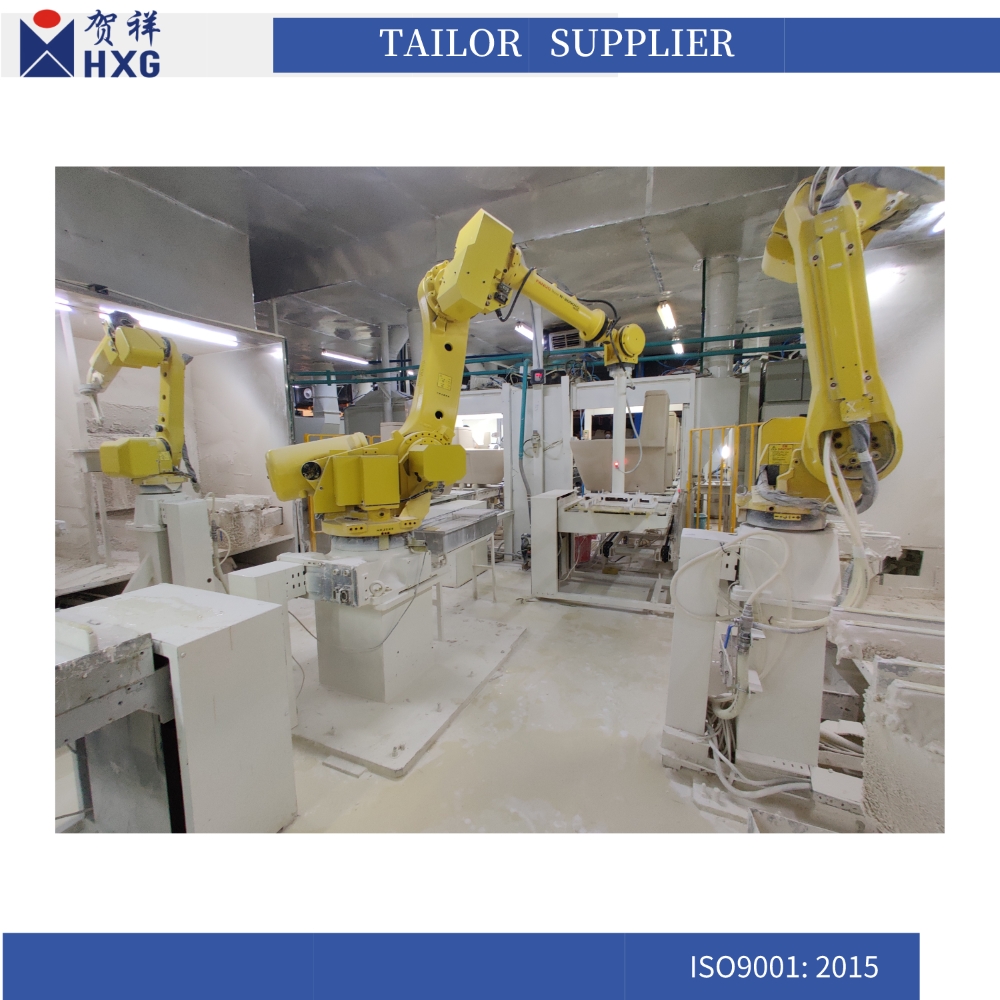
For many legacy sanitary ware plants, attempting to fully automate the entire facility in a single phase introduces paralyzing financial risks. A far more pragmatic strategy is executing targeted upgrades. Often, the smartest entry point is the deployment of a standalone Robot Glazing Cell.
This localized setup acts as a self-contained automated ecosystem. From an engineering perspective, a high-performance cell features a six-axis industrial robotic arm wielding specialized High Volume Low Pressure spray guns. It includes a programmable rotating turntable, a water-wash spray booth engineered for glaze reclamation, and an intuitive control interface. The robot is meticulously programmed to execute repeatable, complex spraying trajectories customized for individual sanitary ware profiles.
Implementing a standalone unit delivers profound strategic advantages. Crucially, it demands a significantly lower initial capital expenditure compared to a sprawling plant-wide overhaul. This conservative entry allows executives to validate the technology on their own floor. You can process your own clay bodies and measure the actual return on investment before approving multi-million-dollar expansions.
Quality improvements are realized almost instantly. The robotic arm maneuvers with mathematical precision, maintaining a flawless distance and angle relative to the curvature of the ceramic body. Picture a robotic nozzle smoothly navigating the hidden curves of a toilet bowl. That is a feat nearly impossible for a fatigued human. This precision eradicates uneven pooling and dry spots. Meanwhile, the cell's controlled micro-environment captures airborne overspray, funneling it back into the production loop and slashing raw material waste.
Once a facility successfully assimilates standalone cells and mathematically validates the operational gains, the strategic evolution continues. The next step is scaling up to a comprehensive, continuous system.
The leap from isolated cells to a full-scale operation requires stitching fragmented processes into a seamless workflow. This mandates the introduction of sophisticated material handling architecture. Automated Guided Vehicles or heavy-duty chain conveyors take over. They smoothly transport fragile green bodies from the drying chambers directly into the glazing zones without human interference.
A fully realized setup deploys multiple robotic arms operating in synchronized harmony. It also seamlessly incorporates auxiliary machinery, such as automated foot-wiping stations that meticulously sponge excess glaze from the base of a toilet. By physically linking these stages, factories remove the human element from heavy lifting, virtually eliminating handling-induced micro-fractures.
A continuous layout eradicates the dead time inherent to manual batch processing. By perfectly synchronizing conveyor speeds with the precise cycle times of the robotic arms, production managers unlock a steady, predictable output rate. Transitioning to a Robotic Glazing Line demonstrates exactly how synchronized mechanics maximize daily production capacity. Cutting-edge configurations leverage RFID or barcode scanning technology. As a specific washbasin model approaches the booth, the system instantly identifies it and commands the robot to load the corresponding spray recipe.
Capital deployment in heavy manufacturing demands rigorous financial justification. Calculating the return on investment involves dissecting both immediate cost reductions and long-term operational efficiencies.
Direct financial impacts are highly quantifiable. The most immediate variable is the sharp contraction in labor overhead. A multi-shift automated configuration effectively replaces several manual spraying booths. This permanently reduces payroll, overtime premiums, and associated human resources burdens.
Simultaneously, raw material optimization yields massive savings. Liquid glaze is expensive. Automated fluid delivery utilizes precise flow regulators and advanced water-curtain recovery booths to trap and recycle overspray. Facilities historically report a massive plummet in overall glaze consumption within the first quarter of robotic implementation.
Indirect savings profoundly influence the annual bottom line. Drastically fewer defects mean minimal labor and energy squandered on rework, grinding, or scrapping fired ceramics. Consistent product quality allows kilns to be loaded to their maximum profitable capacity. When you are not firing scrap, the energy cost per sellable unit drops significantly. Furthermore, eradicating ergonomic strain actively lowers insurance premiums and shields the company from occupational health litigation.
Cost Category | Manual Production | Automated Production | Impact Area |
|---|---|---|---|
Glaze Waste | High - Overspray lost to drains | Low - Active recovery systems | Raw Material Expenditure |
Defect Rate | 8% to 15% | 2% to 5% | Yield and Rework Overhead |
Labor Dependency | High - Requires skilled artisans | Low - Requires machine technicians | Payroll and HR Management |
Throughput | Variable - Dictated by fatigue | Consistent - Machine-paced | Revenue Generation |
When aggregating both direct and indirect financial victories, the payback horizon for sanitary ware automation typically spans 1.5 to 3 years. This is heavily influenced by local labor rates and the scale of the deployment.
Signing a purchase order is merely the beginning. Prepping the physical and digital infrastructure of the facility is an equally critical battleground. Heavy automation demands a highly specific operational environment.
Industrial robots are dynamic, heavy-duty machines. Facility floors must undergo structural engineering audits to guarantee the concrete can endure the static mass and the aggressive dynamic torque generated by swinging robotic arms. Often, reinforced concrete pads or specialized vibration-dampening mounting plates must be poured.
Equally vital is the overhaul of pneumatic and electrical arteries. Precision spraying robots demand a hyper-stable, ultra-clean, and bone-dry compressed air supply. As engineers, we generally specify operating pressures between 6 to 8 bar with strict dew point controls to properly atomize viscous glazes. A single drop of moisture or a momentary pressure dip in the air lines will catastrophically compromise the surface finish. Industrial-grade voltage regulation is also mandatory to shield sensitive Programmable Logic Controllers from factory power surges.
Modern manufacturing thrives on connectivity. Newly installed machinery should interface directly with the plant's Manufacturing Execution System. This digital handshake empowers directors to monitor live metrics, track exact glaze consumption per SKU, and execute predictive maintenance based on actual servo-motor hours rather than guesswork.
Crucially, automation alters the workforce dynamic. It evolves jobs rather than simply erasing them. Proactive management must orchestrate a structured workforce transition. Veteran manual glazers possess an intuitive understanding of how liquid glaze interacts with porous clay. They are frequently the ideal candidates to transition into robot programmers or quality assurance leads. Comprehensive training programs must be deployed to transform laborers into competent technicians capable of navigating touch-screen interfaces and executing baseline electromechanical troubleshooting.
The ultimate success or failure of an automation initiative rests squarely on the shoulders of the chosen vendor. Operations executives must ruthlessly evaluate potential partners based on deep, industry-specific expertise. Actively avoid generalized robotics integrators who lack ceramic experience.
Sanitary ware presents notoriously complex handling challenges. Items like ultra-thin washbasins or bulky, asymmetrical smart toilets possess fragile unfired bodies and erratic centers of gravity. A highly competent manufacturer must showcase robust in-house mechanical engineering. Look specifically for the ability to design custom End-of-Arm Tooling. These specialized grippers must utilize soft-touch pneumatics to secure the clay without inducing micro-cracks. Additionally, the vendor must possess a deep understanding of fluid dynamics to engineer spray systems capable of handling highly abrasive, viscosity-shifting ceramic glazes without clogging.
Because the physical environment of a ceramic plant is uniquely punishing, standard equipment degrades rapidly. Decision-makers must demand empirical case studies and reference sites specifically within the sanitary ware domain. Verify that their robotic arms feature high ingress protection, minimum IP67, and utilize pressurized protective jackets.
Finally, heavily scrutinize the after-sales ecosystem. A capital equipment purchase is a decade-long marriage. Top-tier partners deliver rigorous Site Acceptance Testing, exhaustive staff training, and robust remote diagnostic capabilities.
Forward-thinking leadership views automation not as a one-time upgrade, but as the foundational architecture for continuous technological evolution. As global standards tighten, facilities must be primed to adopt next-generation innovations.
The imminent frontier involves Artificial Intelligence and advanced machine vision. Due to fluctuations in ambient factory moisture and clay composition, green bodies naturally experience slight dimensional variances. Rigidly programmed robots cannot adapt to these shifts. However, future-proofed systems are now integrating 3D laser scanners that map the toilet's topography milliseconds before glazing. If the AI detects a dimensional deviation, it dynamically alters the robot's spray trajectory in real-time, guaranteeing a flawless coat.
Furthermore, stringent environmental mandates are reshaping industrial compliance. Deploying specialized Ceramic Automation Equipment is a quantifiable strategy to align with these global sustainability targets. Advanced robotic booths feature closed-loop dry-filter cyclone separators and water recycling systems. These mechanisms capture toxic overspray, separate heavy metals, and channel reclaimed water back into the facility.
Strategizing for automation requires a calculated, step-by-step methodology rooted in thorough facility audits. Throwing money at random machinery rarely solves systemic inefficiencies. Targeted, data-driven investments yield the highest returns.
Begin the journey by establishing a single, highly efficient robotic station to validate the technology and train your workforce. Once proven, scale the architecture into a fully interconnected, continuous production system. Ultimately, your operational triumph hinges on the caliber of your equipment partner. Select a specialized manufacturer who understands the unique, abrasive, and fragile nature of sanitary ware.
Stop hemorrhaging capital on daily manual inefficiencies and unacceptable defect rates. Take control of your production metrics. Visit HXG Machine today to explore industry-leading automation solutions, schedule a comprehensive facility audit, and request a customized machinery proposal tailored to your exact production needs.
The distinction lies primarily in scale, material handling, and the level of required human intervention. A cell is a localized, standalone automation unit, typically a single robot inside one spray booth. Factory personnel must manually transport the green bodies to the station, load them, and remove them. Conversely, a line is a fully integrated, high-volume continuous system. It utilizes motorized conveyors or AGVs to move products automatically through pre-cleaning, multiple synchronized spraying robots, and inspection, virtually eliminating manual handling.
The deployment timeline depends heavily on product complexity, but a realistic framework is 4 to 6 months. This spans several phases. Engineering and Customization takes time to design custom grippers for your specific molds. Manufacturing and Assembly happen at the vendor's facility. Factory Acceptance Testing uses your actual clay bodies. Finally, Shipping, Installation, and Site Acceptance Testing calibrate the equipment on your factory floor to meet agreed-upon performance indicators.
Yes, provided you partner with a specialized ceramic machinery expert. Reputable manufacturers do not rely on generic, off-the-shelf grippers. They conduct structural analyses of your specific CAD designs and engineer custom tooling. This often involves soft pneumatic clamping or expanding internal bladders that grip a toilet from the inside of the bowl, applying the exact calibrated pressure needed to lift the piece without causing micro-fractures.
While the underlying robotics are complex, modern systems are engineered with user-friendly Human-Machine Interfaces. Operators interact with intuitive touch-screens featuring visual representations of the line. This allows them to select recipes or acknowledge alerts without needing coding knowledge. A reliable vendor will provide multi-week training during installation, upskilling your manual workers into confident machine operators and teaching your maintenance team essential electromechanical troubleshooting.
For sanitary ware production, industrial robots usually require a payload capacity ranging from 50kg to 70kg. This depends on the weight of the custom end-of-arm tooling and the heaviest piece of sanitary ware being processed. One-piece smart toilets are exceptionally heavy when wet, demanding robust servo motors and high-torque wrist joints to maintain smooth spraying trajectories without vibration.
Automated systems drastically reduce glaze waste. By utilizing precise spray guns, programmed fluid delivery parameters, and consistent robot travel speeds, factories eliminate the heavy overspray typical of manual application. When paired with a water-wash recovery booth, manufacturers frequently observe a 15 to 25 percent reduction in total glaze consumption.


