
Views: 0 Author: Site Editor Publish Time: 2026-09-13 Origin: Site


Are your sanitary ware production lines facing stubbornly low yield rates? Traditional casting methods waste both time and raw materials daily. They rely heavily on manual labor. This outdated approach introduces unpredictable variables into the manufacturing equation, ultimately damaging your bottom line.
Recent industry analyses reveal a definitive and urgent pivot in the market. Sanitary ware producers are moving aggressively away from manual plaster casting. Fully automated high-pressure systems are rapidly taking over factory floors. This shift is primarily driven by shrinking profit margins and strictly enforced environmental regulations regarding industrial water usage. Furthermore, plant managers globally report a severe, ongoing shortage of skilled manual labor capable of handling heavy, fragile wet clay. High-pressure casting systems solve these modern bottlenecks seamlessly, provided the equipment is optimized correctly.
In this comprehensive engineering guide, you will learn the crucial mold design factors and demolding technologies that directly dictate the success of two-piece toilet manufacturing.
Advanced Polymer Tooling: Microporous resin forms the foundation of high-pressure casting. It offers superior water filtration and extended lifespans of up to 40,000 cycles, significantly outperforming traditional plaster alternatives.
Precision Geometry: Accurate draft angles and calculated shrinkage allowances are non-negotiable. They prevent the unfired clay, known as the green body, from sticking, tearing, or cracking during the extraction phase.
Robotic Extraction: Implementing an automated lifting system is essential. It safely handles heavy, moisture-rich two-piece toilet components without causing structural deformation or surface indentations.
Fluid Dynamics: Ceramic slip properties, including temperature, viscosity, and specific moisture content, must be strictly calibrated to ensure frictionless demolding and prevent costly machine downtime.
System Alignment: Optimizing the communication between the mold and the demolding mechanisms on your equipment directly increases daily production yields, lowers manual labor costs, and maximizes overall return on investment.
Manufacturing modern sanitary ware demands absolute precision. Repeatability is just as important. The high-pressure casting machine drives this transition from manual labor to automated production. How does it actually work on the factory floor? The machinery injects liquid ceramic slip into clamped molds under intense pressure. This typically ranges between 10 to 15 bars. Consequently, the extreme pressure forces water out of the slip through microscopic pores in the mold. A solid clay body forms rapidly. This consolidation takes a mere fraction of the time required by traditional capillary casting.
Producing two-piece toilets brings highly specific manufacturing challenges. The toilet bowl and the water tank are cast as entirely separate components. Therefore, they require distinct mold geometries and synchronized operational cycles. The bowl features complex internal trapways and rim punchings. In contrast, the tank needs precise flat surfaces and sharp angles to ensure a watertight fit during final assembly.
Hardware alone does not guarantee a perfect product. The machine provides the clamping force, slip injection pressure, and automated sequencing. However, the physical mold and the extraction robotics dictate the true efficiency of a Two Piece Water Closet HPCM. The mold determines the final shape, the surface finish, and the de-watering speed. This machine-mold relationship remains the absolute most critical factor in maximizing sanitary ware yield rates.
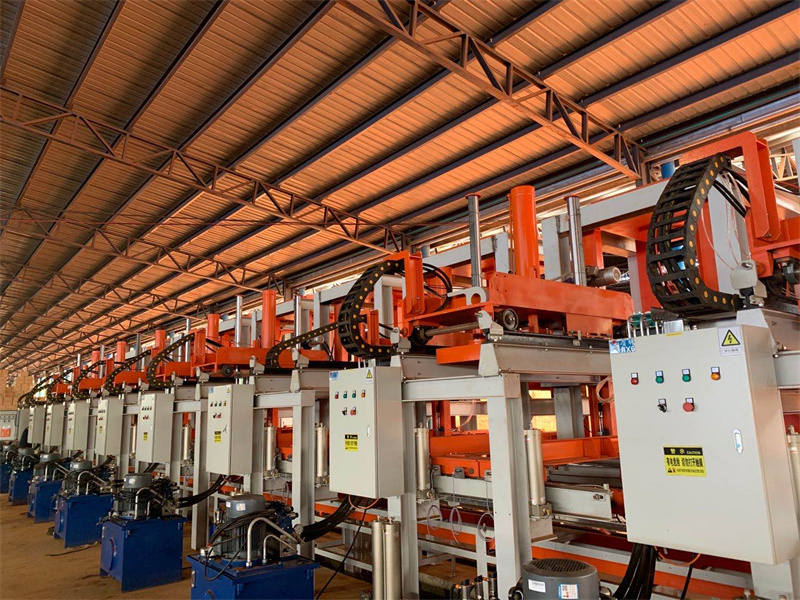
Manufacturers have aggressively shifted away from traditional plaster. Advanced synthetic materials are necessary to withstand the intense physical forces of high-pressure injection. Today, the Resin Working Mould stands as the undisputed industry standard for automated sanitary ware plants.
Engineers construct these molds from a specialized microporous polymer. The secret lies in the internal structure. Specifically, the resin contains millions of interconnected microscopic pores. These usually measure between 5 and 15 microns in diameter. When the machine injects ceramic slip at 15 bars, water is forced violently into these pores. The fluid travels through the resin block and exits via internal drainage channels. A uniformly dense clay body remains behind, perfectly prepped for extraction.
Let us look at the raw numbers. Traditional plaster molds degrade rapidly under pressure. You usually have to replace them after 80 to 100 casting cycles. That means constant downtime and massive storage requirements. A well-maintained resin mold changes the game entirely. It boasts incredible mechanical strength.
Performance Metric | Traditional Plaster Mold | Microporous Resin Mold |
|---|---|---|
Average Lifespan | 80 - 100 cycles | 30,000 - 40,000 cycles |
Operating Pressure | Low capillary pressure | High pressure up to 15 bars |
Surface Finish Quality | Inconsistent, requires heavy sponging | Exceptionally smooth, minimal manual finishing |
Downtime for Tooling | High daily disruption | Virtually eliminated |
Furthermore, the structural density of resin provides a slick internal cavity. This smooth surface drastically reduces friction during the demolding process. The extracted two-piece water closet exhibits far fewer surface defects. This directly reduces the need for manual sponging and finishing before the piece moves to the glazing phase.
Automated casting equipment requires meticulously engineered molds to function correctly. Even a minor miscalculation in the geometry means a total scrap rate for that specific cycle. Imagine a 20-kilogram wet clay bowl gripping a solid core. Without perfect geometry, the piece literally tears itself apart during extraction.
Draft angles are slight tapers built into the vertical walls of the mold cavity. Wet clay creates a strong suction effect against the mold walls. Perfectly perpendicular angles cause the clay to shear instantly. Engineers must calculate precise draft angles. We typically aim for 1 to 3 degrees minimum. This essential taper ensures the toilet bowl and tank slide out smoothly without adhering to the resin surface.
Ceramic slip shrinks immediately as it loses water during the high-pressure casting process. This dimensional reduction continues during the drying and firing stages. A standard ceramic body might shrink by 8 to 12 percent from its liquid state to its final fired state. The mold design must account for the exact shrinkage rate occurring inside the machine. If the internal core fails to accommodate this dynamic contraction, the clay grips the core tightly. Severe structural cracks will form before the piece even reaches the factory floor.
Two-piece toilet bowls contain highly complex internal geometries. The siphon trapway acts as the curved channel facilitating the flushing mechanism. To form these hollow channels, the mold must utilize multi-part configurations with interlocking cores. The design must ensure that once the high-pressure cycle completes, these internal cores retract smoothly. They cannot drag against the soft, highly vulnerable unfired clay.
Extracting the cast product from the mold is arguably the most delicate phase in the manufacturing process. At this stage, the green body holds a moisture content of roughly 18 to 22 percent. It is heavy, soft, and highly susceptible to warping.
Manual demolding is a primary source of product defects. When human operators attempt to lift a freshly cast toilet bowl, their fingers naturally press into the material. This causes micro-dents and subtle warping. You often will not notice these defects until after the firing process. A highly calibrated Vacuum Demolding System eliminates this human variable entirely. The robotic arm uses customized silicone suction cups contoured to match the exact exterior geometry of the sanitary ware. By distributing the lifting force evenly across a large surface area, the system extracts the heavy piece without causing localized pressure points.
Efficiency in modern manufacturing is measured by cycle times. An automated vacuum system communicates directly with the machine programmable logic controller. The exact millisecond the mold fully opens, the vacuum system engages. It removes the product and places it on a drying conveyor instantly. This rapid clearance allows the machine to close the molds and initiate the next slip injection cycle immediately. Daily output skyrockets as a result.
Mechanical components and mold designs are only part of the equation. Chemical properties of the ceramic slip and the factory environment heavily influence whether a demolding cycle is successful or ends in scrap.
Liquid clay consistency is paramount. Floor technicians must strictly monitor viscosity and specific gravity. If the slip contains too much water, the resin mold cannot extract the moisture fast enough within the allotted cycle time. The resulting clay body becomes too soft and collapses upon demolding. Conversely, overly dense slip will not flow into complex mold crevices. The resulting piece becomes brittle and prone to cracking during extraction.
How do you release sticky clay from a mold? The machine uses a brilliant back-flushing mechanism. Before the vacuum system pulls the toilet away, the casting machine pumps compressed air or water backwards. This fluid travels through the drainage channels and out through the microscopic pores of the resin mold. It creates a micro-layer of lubrication. This critical step gently breaks the surface tension for a completely frictionless release.
Walk onto any production floor in winter. You will notice slip viscosity thickening rapidly if left unmonitored. Environmental factors drastically affect the behavior of ceramic slip. Plant managers must actively control the slip temperature. We recommend maintaining it strictly between 30 and 35 degrees Celsius. Cold slip increases viscosity and slows down the capillary de-watering process. This extends cycle times and makes demolding a nightmare.
Even with state-of-the-art equipment, operators encounter specific physical challenges on the floor. Understanding the root causes is essential for maintaining continuous production cycles.
The green body sometimes adheres to the internal core of the mold. When the machine attempts to open, the wet clay remains gripped to the surface, leading to severe deformation. This phenomenon is typically linked to clogged resin pores. Over tens of thousands of cycles, ultra-fine clay particles penetrate the microporous structure. Regular maintenance and permeability testing are non-negotiable. Plant engineers should routinely calibrate the machine air-release pressure to ensure the back-flushing mechanism delivers the exact bar pressure required to break the suction.
Hairline fractures often occur in the internal trapway or along the bowl rim during extraction. These fractures are sometimes invisible to the naked eye prior to firing. Cracking is almost always a result of uneven pulling force or improper draft angles in the original mold design. Upgrading to a highly calibrated vacuum manipulator ensures pulling force is distributed perfectly evenly across the surface, mitigating this stress entirely.
Procuring industrial casting equipment is a major capital expenditure. You are not just buying a single machine. You are investing in a holistic, interdependent production system. Here is what senior engineers look for when selecting high-yield equipment:
Technological Alignment: The programmable logic controller must seamlessly communicate with the vacuum manipulator. If the software lags, your cycle times will suffer.
Clamping Force Capacity: Ensure the machine frame and hydraulics can sustain 10 to 15 bars of slip injection pressure without experiencing mold leakage or frame distortion.
Precision Demolding Integration: The system must feature programmable back-flushing. The ability to adjust air and water release pressure independently is crucial for complex two-piece toilet geometries.
End-to-End Vendor Solutions: Partner with a manufacturer that designs the high-pressure machine, formulates the resin, and programs the robotics. Single-source responsibility simplifies troubleshooting and accelerates installation.
By implementing an optimized high-pressure system, manufacturing facilities observe distinct financial benefits. Automated slip injection and robotic demolding drastically reduce the headcount required per casting line. Automated vacuum extraction can drive scrap rates down from a standard 15 percent to under 2 percent. Premium microporous resin molds virtually eliminate the daily downtime previously required for plaster mold changeovers.
Success in modern sanitary ware manufacturing relies entirely on precise mold design and integrated automation technology. Upgrading to advanced casting systems keeps your plant highly competitive in a market demanding massive volume and flawless quality. Evaluate your current production lines to find immediate improvement areas. When you are ready to scale operations and eliminate manual bottlenecks, choose equipment engineered for rugged reliability. For custom casting and vacuum solutions tailored specifically to your two-piece toilet production needs, explore the advanced machinery options at Hexiang Machine to maximize your factory yield and long-term profitability.
Unlike traditional plaster molds that degrade quickly and require replacement after 80 to 100 cycles, a highly engineered resin mold offers exceptional longevity. Under standard operating conditions and with proper maintenance, a microporous resin mold lasts for 30,000 to 40,000 casting cycles. This durability comes from the high tensile strength of the polymer structure. It resists the severe 10 to 15 bar clamping forces exerted during the casting process, drastically reducing tooling costs over time.
Freshly cast sanitary ware retains high moisture immediately after the casting cycle. The clay is heavy, soft, and highly susceptible to structural deformation. A two-piece toilet bowl carries complex internal geometries that easily warp under uneven manual pressure. An automated extraction system utilizes suction cups that map precisely to the contours of the toilet. It applies evenly distributed lifting force to extract the piece, preventing finger-denting, uneven pulling stress, and micro-cracking.
Yes, modern high-pressure casting systems are highly versatile. Transitioning between product types requires changing the mold sets and adjusting operational parameters. Two-piece toilets are generally less geometrically complex to cast than unified one-piece models. Casting a one-piece toilet often requires more intricate mold designs with additional moving core parts. Operators simply adjust the slip injection pressure, holding times, and extraction coordinates in the control panel when switching production models.
Temperature directly impacts the viscosity of the ceramic slip. If the slip drops below 30 degrees Celsius, it thickens significantly. Thicker slip flows poorly into the intricate crevices of the mold, leading to incomplete casts. Furthermore, cold slip slows down the capillary de-watering process inside the microporous resin. Maintaining a steady temperature between 30 and 35 degrees Celsius ensures fast, consistent casting cycles and prevents the clay from sticking to the mold core during extraction.
For standard sanitary ware production, engineers typically design molds with a draft angle between 1 and 3 degrees. This slight taper on the vertical walls is critical. It allows the heavy wet clay to release from the mold cavity without creating a vacuum seal. If the angle is too steep, the aesthetic design of the toilet is compromised. If it is too shallow, the extraction robotics will tear or fracture the clay during removal due to excessive wall friction.


