
Views: 0 Author: Site Editor Publish Time: 2026-09-09 Origin: Site


Setting up a new ceramic manufacturing plant involves massive financial stakes and complex engineering challenges. In this high-stakes environment, your machinery serves as the actual heartbeat of the entire operation. Plant managers, investors, and procurement officers must face a harsh reality. A poorly calculated machinery investment will inevitably bottleneck your entire production line.
Picking the wrong manufacturer ruins production efficiency. It inflates operating expenses and severely impacts your long-term Return on Investment. Conversely, selecting the right engineering partner ensures seamless integration, consistent product quality, and a future-proofed facility. This choice extends far beyond a simple equipment transaction. It is the single most critical strategic decision you will make for your plant.
The ceramic sector is currently undergoing a massive transformation. Driven by strict environmental regulations and fluctuating global energy costs, plant operators are moving away from manual, energy-heavy processes. The modern industry trend heavily favors decarbonization and smart manufacturing. We see a rapid shift toward electric drying technologies, AI-driven predictive maintenance, and highly precise automated raw material preparation. Buyers must align their procurement strategies with these industry shifts to avoid investing in obsolete technology from day one.
Strategic Partnership: Partnering with a specialized manufacturer ensures native compatibility across all production phases, mitigating costly mechanical bottlenecks.
Unified Control Systems: Sourcing high-quality equipment from a single reliable vendor minimizes downtime and maximizes overall yield through centralized data monitoring.
Automation is Mandatory: Implementing advanced material handling infrastructure guarantees precise raw material management and eliminates the risks of manual labor.
Total Cost of Ownership: Thorough evaluation of thermal efficiency, spare parts logistics, and after-sales support protects your capital investment over its entire lifecycle.
When establishing a new ceramic production facility, the first objective metric to evaluate is the manufacturer's operational history. Longevity in the heavy machinery sector often correlates with an ability to navigate complex mechanical challenges. However, years in business alone do not guarantee competence. Procurement officers must look for a proven track record specifically tailored to the nuances of the ceramics industry.
To move beyond polished sales pitches, buyers should request a comprehensive reference list of operational plants equipped by the vendor over the past decade. Contact these plant managers directly. Ask them hard, engineering-focused questions. How does the machinery handle highly abrasive feldspar? Does the equipment clog when processing clay with unusually high moisture content? Real-world performance data always trumps theoretical brochure specifications.
Furthermore, investigating the manufacturer's financial stability is non-negotiable. Building a ceramic plant is a multi-year project spanning from initial blueprint design to final wet commissioning. You need absolute certainty that your chosen partner possesses the financial health to see the project through without unexpected delays. An experienced manufacturer also acts as a valuable engineering consultant during the plant layout phase, helping to optimize the physical footprint of the machinery for maximum workflow efficiency.
A modern ceramic production facility requires a vast array of interconnected machinery. You need high-capacity ball mills, spray dryers, hydraulic presses, glazing lines, and roller kilns. When evaluating a prospective supplier, it is crucial to assess the breadth and depth of their Ceramic Plant Equipment portfolio.
Procurement teams frequently face the dilemma of choosing between a single-source turnkey solution and buying individual machines from different niche specialists. While multi-sourcing might seem cost-effective on paper, it routinely leads to severe integration nightmares. Different machines running on proprietary software often fail to communicate effectively. This creates data silos and synchronized production failures.
Choosing a manufacturer capable of providing a comprehensive suite of equipment ensures that all mechanical and software interfaces are natively compatible. This unified approach drastically reduces the time required for commissioning. Industry standards dictate that equipment should be integrated via Supervisory Control and Data Acquisition systems and Programmable Logic Controllers. This allows plant managers to monitor the entire production flow from a centralized control room. Seamless integration ensures that if a bottleneck occurs at the glazing line, the pressing department automatically adjusts its output rate to prevent material buildup.
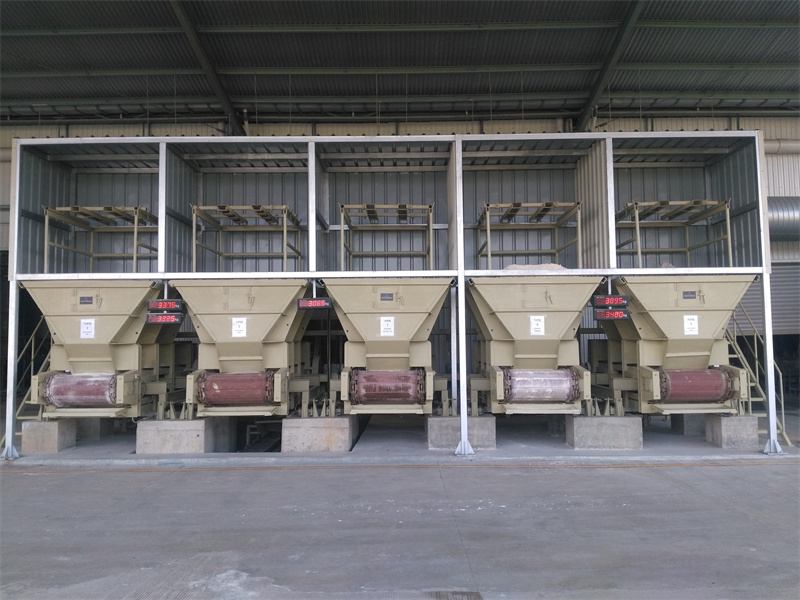
The raw material preparation phase sets the foundation for the entire ceramic manufacturing process. Any inconsistency at this stage inevitably results in structural defects in the final fired product. Therefore, scrutinizing the material handling infrastructure is a mandatory step for plant investors.
The continuous movement of bulk materials between different processing stages presents a critical logistical challenge. Manual material transport is labor-intensive and introduces the risk of contamination, material segregation, and inconsistent feed rates. To mitigate these risks, a highly engineered Automatic Feeding System is required. Engineered to transport bulk raw materials from storage silos to the milling equipment without human intervention, this automation eliminates physical hazards and ensures an uninterrupted material flow.
When assessing this infrastructure, buyers must scrutinize both the mechanical design and the software logic driving it. Ceramic powders are notoriously abrasive and prone to generating dust. Key components like belt conveyors, bucket elevators, and pneumatic transport lines must feature wear-resistant linings made of alumina ceramics or hardened steel alloys. Additionally, the system should incorporate robust anti-bridging mechanisms in the storage silos to ensure a smooth flow of powder. If a blockage occurs, intelligent controllers should automatically trigger an alert and halt preceding conveyor sections to prevent material overflow.
Moving materials efficiently is important, but proportioning them accurately is the true science behind ceramic manufacturing. The exact chemical and physical properties of a ceramic tile or sanitaryware piece depend entirely on the precision of the raw material recipe. Even a minor deviation leads to catastrophic defects during the firing process, including warping, excessive shrinkage, or structural weakness.
Modern dosing technology represents a significant leap forward from outdated manual batching methods. For high-stakes ceramic production, gravimetric dosing has become the industry standard. Volumetric systems measure by volume, which easily gets skewed by material density variations and ambient moisture. In contrast, gravimetric systems measure by exact weight using highly sensitive load cells.
Decision-makers should specifically inquire about the Feeding System Dosing capabilities offered by the manufacturer. High-end systems utilize advanced loss-in-weight algorithms capable of handling bulk materials alongside micro-ingredients with sub-gram accuracy. Look for equipment that guarantees a dosing accuracy of ±0.5 percent or better. The dosing equipment must feature automated feedback loops. If the sensors detect a deviation from the programmed recipe, the system instantly adjusts the feeder speed to correct the variance, minimizing waste and ensuring strict batch-to-batch consistency.
Feature | Traditional Volumetric Feeding | Advanced Gravimetric Auto-Feeding |
|---|---|---|
Measurement Method | By volume, highly affected by bulk density changes. | By exact weight using high-precision load cells. |
Dosing Accuracy | ±2.0% to ±5.0% | ±0.2% to ±0.5% |
Feedback Loop | Manual adjustment required. | Real-time automatic speed correction via PLC. |
Product Consistency | Prone to batch-to-batch color and shrinkage variations. | Strict uniformity, drastically reducing firing defects. |
Ceramic manufacturing is notoriously energy-intensive. The continuous operation of massive ball mills, high-pressure spray dryers, and continuously firing kilns consumes vast amounts of electricity and natural gas. Consequently, energy efficiency is no longer just an environmental consideration. It is the absolute primary driver of operational profitability.
When reviewing machinery specifications, forward-thinking buyers must demand verifiable data regarding energy innovations. Look for manufacturers that incorporate Variable Frequency Drives into their heavy motors. This technology allows the machinery to adjust its power draw based on the actual load rather than running at full speed continuously. A hydraulic press equipped with an advanced servo-motor system can reduce electricity consumption by up to 30 percent compared to traditional asynchronous motors.
Furthermore, evaluate the Overall Equipment Effectiveness benchmarks provided by the vendor. A machine might boast a high theoretical output, but if it requires frequent stops for cleaning or calibration, its actual efficiency plummets. Request empirical data from existing installations to validate the manufacturer's claims regarding throughput and energy usage per ton of processed material.
The reliability of heavy industrial machinery is determined long before it arrives at your construction site. It is established on the manufacturer's assembly floor through rigorous quality control and testing protocols. Buyers must thoroughly investigate how a manufacturer ensures the structural and software integrity of their equipment.
Begin by requesting documentation on their internal quality management systems. More importantly, understand their procedures for the Factory Acceptance Test. This test is a critical milestone where the machinery is fully assembled, wired, and operated at the manufacturer's facility. It proves that the equipment meets the agreed-upon technical specifications under simulated production conditions before shipping.
Additionally, assess the quality of the raw materials the manufacturer uses to build their machines. Critical wear parts, such as mill linings, pump impellers, and press molds, must be manufactured from premium, wear-resistant alloys or advanced composites. Using substandard metals to cut initial manufacturing costs will inevitably result in premature equipment failure and catastrophic production downtime.
The successful procurement of heavy machinery is only the first half of the equation. The physical deployment of the equipment is where many projects face critical delays and cost overruns. A buyer must deeply investigate the manufacturer's protocols for on-site installation and commissioning.
The manufacturer must provide a detailed, phased installation plan that aligns perfectly with the plant's civil engineering progress. Verify if the vendor provides skilled on-site supervisors to oversee the mechanical and electrical installation, rather than relying entirely on third-party local contractors. The commissioning phase must include dry runs to check mechanical integrity without material, followed by wet runs using actual ceramic slip and powders to simulate full production.
Crucially, the contract must explicitly define the performance guarantees that must be met during the Site Acceptance Test before final payment is released. These guarantees typically include achieving a specific production capacity, maintaining a defined defect rate threshold, and adhering to stated energy consumption limits.
Even the most sophisticated machinery will underperform if the plant's operating personnel lack the necessary expertise. Therefore, a comprehensive training program is a non-negotiable requirement when selecting a machinery partner.
Buyers must ensure that the manufacturer provides structured, in-depth knowledge transfer for operators, maintenance technicians, and process engineers. This should not be limited to a brief, rushed handover session. It must encompass theoretical classroom instruction on the principles of ceramic processing, as well as hands-on, practical training directly at the control panels.
Key areas of training should cover standard operating procedures, troubleshooting common mechanical faults, and optimizing machine parameters for different ceramic product lines. Request comprehensive, localized documentation, including electrical schematics and maintenance manuals in the native language of your workforce.
In the high-stakes, continuous operation environment of a ceramic plant, downtime is measured in thousands of dollars per hour. Kilns operate at extremely high temperatures and cannot be easily shut down or restarted without incurring massive energy costs and risking refractory damage. Consequently, the after-sales support infrastructure is just as important as the heavy iron and steel of the equipment itself.
Critically assess the Service Level Agreements offered by the vendor. What is the guaranteed response time for technical emergencies? Modern machinery often features secure IoT integration, allowing the manufacturer's engineers to troubleshoot software issues remotely in real-time. This capability drastically reduces the Mean Time to Repair.
Equally important is the logistics of spare parts. Heavy wear-and-tear components require regular replacement. Inquire whether the manufacturer uses standardized, commercially available components or proprietary parts that lead to vendor lock-in. Verify that the manufacturer maintains regional distribution hubs to ensure rapid delivery, preventing weeks of paralyzed production while waiting for a critical component to clear customs.
One of the most common and fatal mistakes made by procurement teams is basing their decision solely on the initial Capital Expenditure. While the sticker price of the machinery is an important factor, it represents only a fraction of the financial commitment over the equipment's 10-to-15-year lifecycle. A strategic buyer must calculate the Total Cost of Ownership.
This metric encompasses the initial purchase price, shipping and installation costs, day-to-day energy consumption, routine maintenance, spare parts, and the financial impact of projected downtime. A cheaper machine from a less reputable vendor often incurs significantly higher Operating Expenses due to poor thermal efficiency and frequent mechanical breakdowns. Equipment that features energy recovery systems may demand a higher initial outlay but will yield a significantly superior long-term ROI. A rigorous analysis provides an objective, evidence-based framework for comparing competing manufacturers.
The timeline varies heavily based on plant capacity, automation levels, and site readiness. However, mechanical installation and comprehensive commissioning typically require between 3 to 6 months from the time the heavy equipment arrives on site.
An acceptance test should strictly evaluate the maximum continuous production output rate, the percentage of defect-free products generated, energy consumption per ton of output, and the flawless execution of all automated safety protocols.
Yes, reputable manufacturers can retrofit older plants with modern dosing and feeding systems. However, this requires a detailed engineering audit to ensure that legacy machinery can interface with modern controllers and data networks without causing communication bottlenecks or mechanical mismatches.
Depending on local labor costs and current material waste levels, plants upgrading to fully automated gravimetric feeding and dosing systems typically see a full return on investment within 18 to 24 months, driven primarily by reduced raw material waste and lower defect rates.
High-moisture clay tends to stick and bridge inside hoppers. Advanced feeding systems handle this by incorporating specialized anti-stick polymer linings, pneumatic vibrators, and custom-engineered lump breakers at the discharge points to ensure a continuous, uninterrupted flow.
Standard warranties typically cover parts and workmanship for 12 to 24 months following the successful completion of the site acceptance testing. Extended warranties are often available and are usually tied to specific, ongoing maintenance contracts.
Choosing the right machinery partner forms the cornerstone of your plant's future operational success. It requires moving beyond surface-level sales pitches and conducting rigorous, objective technical evaluations. Always evaluate a prospective manufacturer's technical support capabilities, engineering track record, and the holistic integration of their equipment.
A reliable manufacturer does more than just supply heavy metal. They boost your daily output, enhance product consistency, and help reduce long-term operational costs significantly. By carefully researching their automation technologies, energy efficiency metrics, and after-sales infrastructure, you safeguard your capital. Your heavy investment deserves the best technology available to ensure decades of profitable production.
Ready to build a high-efficiency, future-proof ceramic production facility? Explore advanced, precision-engineered manufacturing solutions tailored to your exact plant specifications at https://www.hxgmachine.com, and secure your long-term operational profitability today.


