
Views: 0 Author: Site Editor Publish Time: 2026-09-10 Origin: Site


Picture a bustling factory floor. Thousands of perfectly molded greenware pieces enter the firing chamber. Hours later, they emerge warped, cracked, and entirely unsellable. As a thermal engineer, I see this scenario far too often. Kilns consume the vast majority of a ceramic plant's total energy. A single miscalculation during the firing curve does not just waste raw clay. It burns through thousands of dollars in wasted natural gas and lost production time.
Buying heavy industrial machinery is never a simple, plug-and-play transaction. It is a multi-decade operational commitment. Choosing the wrong equipment permanently handicaps your long-term return on investment. In this guide, we break down the critical technical factors involved in selecting the right thermal processing units. We will explore exactly why collaborating with a trusted, engineering-focused manufacturing partner is the most profitable decision a plant manager can make.
Strategic Guidance is Non-Negotiable: A reputable manufacturing partner audits your specific production volumes, factory footprint, and glaze chemistry to engineer a customized thermal solution.
Matching Machinery to Output: Different product lines demand distinct thermal profiles. Knowing when to deploy a batch-processing unit versus a continuous track system optimizes both sellable yield and fuel consumption.
Lifecycle Value Over Upfront Price: Precision firing technology radically diminishes long-term operational expenses through superior refractory insulation and drastically reduced defect rates.
Ecosystem Integration: Your new machinery must synchronize flawlessly with existing glazing lines, drying chambers, and automated guided vehicles.
The firing process represents the final, irreversible stage of ceramic manufacturing. It functions as the ultimate crucible. Raw, fragile clay bodies undergo intense chemical and physical transformations to become durable finished goods. Any underlying flaws introduced during the molding or preliminary drying phases are ruthlessly exposed under extreme heat. The kiln is not merely a heavy-duty heater. It acts as the definitive quality control checkpoint in your entire operation.
Temperature uniformity dictates structural integrity. Poor draft control creates uneven heat distribution. These thermal gradients force the clay to shrink at different rates. The result is a high incidence of warping, structural cracking, and surface glaze defects like pinholing.
Investing in advanced Ceramic Firing Equipment ensures that every single product experiences the exact same heating curve. Whether a piece is positioned on the outer edge or the dead center of the kiln car, the thermal exposure remains identical. Facilities that upgrade to precision-engineered firing systems routinely report steep declines in their scrap rates. That immediate reduction in wasted material directly translates to higher volumes of first-quality, sellable goods.
Thermal processing units devour the lion's share of a factory utility budget. Outdated, poorly insulated equipment bleeds ambient heat. It wastes immense amounts of natural gas and aggressively drives up the cost per fired piece.
Modern equipment leverages cutting-edge refractory materials and strategically optimized burner configurations to lock in thermal energy. By drastically reducing heat loss and refining the combustion process, modernized units slash monthly utility bills. Prioritizing energy-efficient machinery is a foundational step toward securing long-term operational viability.
Before diving into equipment specifics, procurement officers must understand the macroeconomic trends reshaping the ceramic manufacturing sector. Recent market analyses highlight a seismic industry-wide pivot toward decarbonization and smart manufacturing. Driven by the volatility of the global energy crisis, factory operators are actively abandoning legacy fossil-fuel reliance.
We are seeing a massive surge in demand for hydrogen-ready burners and hybrid-electric firing systems. These innovations are specifically designed to future-proof operations against unpredictable natural gas shortages. The integration of the Industrial Internet of Things is no longer a luxury. It is the new baseline. Today's plant managers expect equipment embedded with smart sensors that provide real-time predictive maintenance alerts. This ensures minor burner anomalies are corrected long before they cause a catastrophic batch failure.
High-intent buyers and plant engineers should never finalize a capital expenditure of this magnitude simply by flipping through a glossy product brochure. Industrial firing units are highly complex, bespoke assets. A premier manufacturing partner serves as a dedicated technical consultant. They ensure the hardware aligns perfectly with your daily production realities.
Prior to recommending a specific model, a competent engineering team executes a rigorous audit of your current operations. This deep dive includes analyzing your specific clay body composition and glaze chemistry. Different organic materials demand highly specific heating and cooling trajectories to avoid thermal shock.
They will also evaluate your shift schedules and throughput targets. A mega-factory running relentless 24/7 shifts possesses vastly different thermal requirements than an artisanal operation producing low-volume architectural tiles. This data-backed assessment prevents the catastrophic financial mistake of acquiring an underpowered unit.
Off-the-shelf solutions rarely deliver peak performance in heavy industrial ceramics. Elite manufacturers distinguish themselves by offering exhaustive customization services. For instance, they might design a custom burner layout utilizing high-velocity silicon carbide burners to guarantee optimal heat penetration for specific product geometries.
They also specify the exact insulation architecture based on your maximum sustained operating temperatures. This often involves a hybrid lining of ultra-dense refractory firebrick for the hot face and lightweight, high-grade ceramic fiber for the backing. Control panels are similarly customized to empower floor operators to easily program intricate, multi-stage firing cycles.
Aligning the hardware to your specific product catalog forms the bedrock of a highly profitable factory floor. Manufacturers engineer various classifications of thermal processing units to overcome unique production hurdles.
A batch-firing system operates by loading raw greenware onto heavily insulated cars. These cars are then rolled into a stationary firing chamber. Once the specific thermal cycle concludes and the chamber cools, the car is extracted to make way for the next batch.
This architectural design delivers unparalleled operational agility. It is the absolute optimal choice for facilities wrestling with unpredictable production schedules. Plant managers can radically alter the temperature curve for every single run without halting a continuous production line. This makes the equipment heavily favored for specialized technical ceramics.
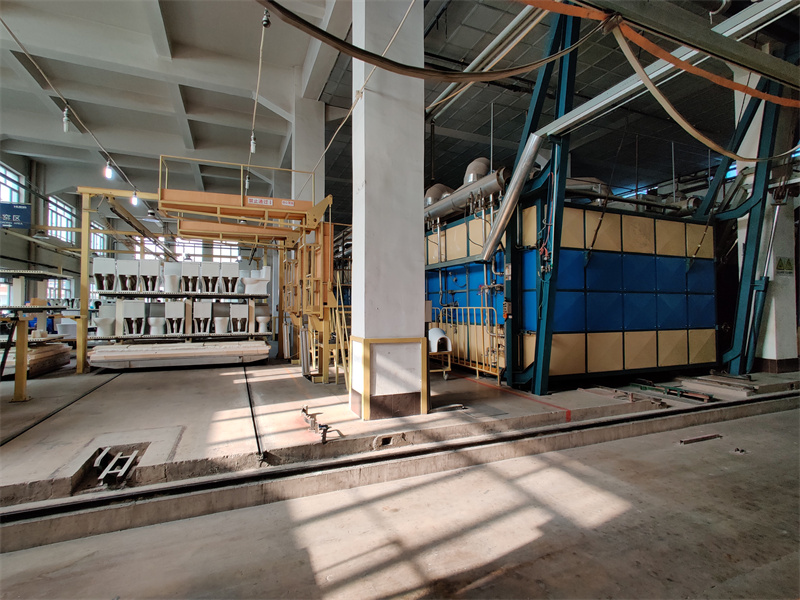
Manufacturing heavy-duty items like commercial toilets, washbasins, and decorative pedestals presents a formidable thermal challenge. These products are incredibly massive and feature intricate geometric shapes characterized by varying wall thicknesses. To process these items successfully, a factory requires a highly specialized Sanitary Ware Kiln.
These units are masterfully engineered to maintain razor-sharp temperature gradients. Consider the critical quartz inversion phase occurring around 573 degrees Celsius. The ceramic body undergoes rapid physical expansion. If a massive ceramic basin heats or cools even slightly too fast during this window, internal stresses will fracture the piece from the inside out. Specialized units utilize strategic burner placements and sophisticated draft fans to guarantee slow, deeply even heat penetration.
For industrial facilities tasked with churning out massive quantities of uniform products, a continuous tunnel system is undeniably the most logical investment. Unlike intermittent batch processing, these continuous units operate around the clock. Products glide slowly along an automated track, passing seamlessly through dedicated pre-heating, vitrification, and cooling zones.
While they inherently lack nimble batch flexibility, continuous track systems provide unmatched fuel efficiency and staggering output capacities for standardized goods.
When sitting at the negotiation table with your manufacturing partner, procurement teams must look far beyond basic dimensional footprints. You must aggressively interrogate the technical specifications.
The chemical makeup of your raw materials dictates the required thermal treatment. Standard terracotta might only need to reach temperatures hovering between 1000 and 1150 degrees Celsius. High-alumina technical ceramics and fine porcelain demand blistering environments exceeding 1300 degrees Celsius.
You must rigorously verify the maximum continuous operating threshold of the equipment. Equally important is the discussion surrounding cycle times. Accelerating cycle times artificially inflates daily throughput on paper. However, pushing the temperature faster than your specific clay body can safely absorb will trigger catastrophic structural failures across the entire batch.
Selecting the primary combustion fuel directly dictates both your monthly operating overhead and your environmental compliance status. Below is a detailed comparative breakdown of standard fuel sources.
Fuel Source | Initial Infrastructure Cost | Operational Cost | Environmental Impact | Ideal Manufacturing Application |
|---|---|---|---|---|
Natural Gas | Moderate | Low to Moderate | Moderate | Large-scale industrial production, continuous track systems. |
Electricity | Low | High | Low | Small to medium batch units, precision technical ceramics. |
LPG / Propane | Moderate | High | Moderate | Remote facilities lacking natural gas pipeline infrastructure. |
The internal refractory lining is equally vital. Heavy-duty refractory firebrick provides exceptional durability and massive heat retention, making it perfect for continuous operations. Advanced ceramic fiber insulation is incredibly lightweight and sheds heat rapidly. This makes it the superior choice for batch units that must heat up and cool down multiple times a week.
The days of operators manually twisting gas valves are over. Today's advanced thermal units are governed by Programmable Logic Controllers and Supervisory Control and Data Acquisition software. These intelligent control suites fully automate the firing curve. They micro-adjust gas flow and exhaust dampers in real-time to hold temperatures within a fraction of a degree. By virtually eliminating human error, automated controls slash labor overhead and guarantee flawless reproducibility.
Authorizing capital expenditure for heavy industrial equipment demands a complete paradigm shift. Buyers must look past the initial sticker shock and evaluate the total lifecycle value. Treating a multi-decade asset like a short-term operational expense is a fatal financial misstep.
Procurement departments often face immense pressure to select the lowest bidder. Securing the absolute cheapest machinery almost always guarantees the highest total cost of ownership. Discounted models notoriously cut corners by utilizing inferior, low-density insulation and budget-grade burners.
Over a standard five-year operational window, the sheer volume of excess natural gas consumed by a poorly insulated chamber will dwarf whatever capital was saved on the initial purchase. Substandard internal components degrade rapidly under thermal stress, triggering frequent maintenance halts and crippling unplanned downtime.
The most immediate and visible return on investment from premium firing technology is witnessed in the scrap bin. Consider a mid-sized factory producing 10,000 premium units a month, carrying a net profit margin of 10 dollars per unit. If an aging, inconsistent thermal unit causes a 10 percent defect rate, that facility is silently bleeding 10,000 dollars every single month.
Upgrading to a custom-engineered system that shrinks the defect rate down to a mere 3 percent instantly recovers 7,000 dollars a month in previously incinerated revenue. This stark mathematical reality proves that investing upfront in elite firing technology essentially pays for itself.
No piece of heavy machinery operates in a vacuum. A new firing unit serves as a highly synchronized node within a much larger manufacturing ecosystem. It must physically and digitally handshake with automated glazing stations, climate-controlled drying rooms, and robotic packaging sectors.
A holistic manufacturing partner thoroughly analyzes your entire factory floor plan before drafting a blueprint. They ensure that the loading and unloading mechanisms of the new unit integrate perfectly with your current material handling workflow. As modern plants increasingly deploy Automated Guided Vehicles to transport fragile greenware, precision is paramount. The engineering team must flawlessly design the track gauges, car docking heights, and automated door sequences to synchronize with these robotic systems.
Available square footage on a factory floor is a highly premium commodity. The physical footprint of your selected machinery dictates the spatial flow of your entire operation.
If a facility is severely limited in linear space but still requires agile production capabilities, an engineering consultant will likely recommend installing a Shuttle Kiln. Because it utilizes a compact, rectangular footprint and processes cars in batches, it maximizes lateral space efficiency. Conversely, a continuous track system demands massive lengths of uninterrupted linear space. Below is a spatial planning guide to assist procurement teams.
Kiln Classification | Footprint Requirement | Production Flow Dynamics | Ideal Manufacturing Application |
|---|---|---|---|
Batch Processing Unit | Compact, flexible square or rectangular area | Intermittent loading, isolated cycles | Specialty ceramics, fluctuating production volumes |
Continuous Track System | Extensive, uninterrupted linear space | Continuous, automated progression | High-capacity tiles, construction bricks, or tableware |
Complex Geometry Unit | Medium to large, requires dedicated zoning | Batch or continuous, depending on design | Toilets, heavy basins, and thick-walled ceramic shapes |
Even seasoned plant managers and veteran engineers can stumble into critical procurement errors if they fail to collaborate transparently with their manufacturing partner. Navigating around these costly pitfalls is absolutely essential for a smooth, profitable deployment.
One of the most prevalent errors in industrial purchasing is acquiring machinery based strictly on today's output metrics. While a smaller capacity unit presents an attractive upfront price, it rapidly transforms into a suffocating bottleneck the moment market demand spikes. Running a unit at maximum capacity continuously leaves zero margin for routine maintenance or sudden emergency orders.
Savvy buyers project their throughput requirements three to five years down the line. A trustworthy partner will frequently advise purchasing a slightly larger unit equipped with modular burner controls. This forward-thinking strategy allows the factory to safely scale up production volumes without being forced to buy an entirely new machine just two years post-installation.
Securing the hardware is only the first step. Keeping it running for twenty years is the true challenge. A fatal mistake is choosing a vendor based solely on the lowest bid while completely neglecting to establish a rock-solid after-sales service contract. Internal components like silicon carbide heating elements, thermocouples, and refractory bricks will inevitably degrade under punishing thermal stress.
It is vital to verify that your manufacturer maintains a deep inventory of standardized spare parts and guarantees rapid-response technical support. This should include remote software diagnostics and on-site operator training.
The vitrification of ceramics is a delicate, unforgiving chemical dance. A frequent technical disaster occurs when a factory procures equipment that simply lacks the precise atmospheric controls required by their specific glazes. For instance, if your signature glaze requires a heavy reduction atmosphere to achieve a specific copper-red hue, but the new unit's draft fans cannot properly restrict oxygen flow, the final product will consistently fail visual quality control.
In our current era of soaring utility rates, ignoring waste-heat recovery technology is a massive financial oversight. Traditional, outdated units blindly vent thousands of degrees of exhaust heat straight out of the chimney and into the atmosphere during the cooling cycle.
State-of-the-art systems actively capture this exhausted thermal energy and intelligently redirect it. This recycled heat can be piped directly into the pre-heating zones of the chamber or channeled into adjacent drying rooms to safely pull moisture out of raw greenware. Failing to mandate a heat recovery system during the initial design phase guarantees permanently inflated gas bills.
Selecting the optimal thermal processing unit is a highly complex intersection of thermal engineering, spatial logistics, and long-term financial planning. The ultimate success of this massive capital investment relies entirely on the expertise and transparency of the manufacturing partner you choose to work with.
Whether your facility requires the nimble flexibility of a modern batch-processing unit to handle specialty architectural tiles, or a highly specialized system dedicated to complex sanitary ware, prioritizing precise temperature control and robust energy efficiency is paramount. By avoiding common procurement pitfalls and focusing on total lifecycle value rather than upfront costs, you safeguard your factory profitability and operational sustainability for decades to come. If you are ready to upgrade your production line with precision-engineered thermal solutions, visit HXG Machine to explore custom equipment designed specifically for your factory floor.
The fundamental difference lies in their operational workflow and overall production capacity. A shuttle model is an intermittent, batch-processing unit where greenware is loaded onto movable cars, rolled into a stationary chamber, and fired in isolated cycles. This grants operators immense flexibility to change temperature curves between batches, making it perfect for diverse product lines. In contrast, a tunnel model is a continuous track system operating non-stop. Products move slowly through permanently set pre-heating, vitrification, and cooling zones. While it lacks batch flexibility, it delivers unrivaled energy efficiency for massive, uniform production runs like standard floor tiles.
Selecting equipment for sanitary ware requires an intense focus on highly precise cross-sectional temperature distribution. Items like commercial toilets and heavy basins possess complex geometries and thick walls. This makes them incredibly vulnerable to thermal shock and internal micro-cracking if heated unevenly. You must source equipment engineered with customized burner placements and advanced draft fan controls that guarantee slow, deeply penetrating heat. Partnering with a specialized manufacturer who understands the specific quartz inversion vulnerabilities of heavy clay is critical to minimizing defect rates.
Energy consumption represents the single largest ongoing operational expense in any ceramic manufacturing facility. The vitrification process requires burning massive volumes of natural gas or drawing heavy electrical loads to sustain temperatures well over 1200 degrees Celsius. Highly efficient units utilize aerospace-grade refractory insulation to trap heat and deploy recovery systems that recycle exhaust air back into drying rooms. Prioritizing these energy-efficient features drastically lowers the utility cost per fired piece, directly widening your profit margins while ensuring compliance with increasingly strict environmental emissions regulations.
When properly maintained, a heavy-duty industrial kiln can easily operate for 20 to 30 years. The longevity of the equipment depends heavily on the quality of the initial refractory brickwork, the frequency of routine maintenance, and the operational temperatures it sustains. Components like burner nozzles, thermocouples, and door seals are considered consumable wear parts and will need replacement every few years. However, the core steel superstructure and primary insulation architecture are designed for multi-decade lifespans, provided they are not subjected to severe thermal shock from improper cooling cycles.
For high-volume, continuous production, a modern tunnel kiln integrated with a waste-heat recovery system is universally recognized as the most energy-efficient design. Because the heating zones remain at a constant temperature 24/7, no energy is wasted repeatedly heating up and cooling down the massive refractory walls. For flexible batch production, advanced shuttle kilns utilizing ultra-lightweight ceramic fiber insulation and high-velocity regenerative burners offer the best energy efficiency, as they minimize the thermal mass that needs to be heated during each independent cycle.


