
Views: 0 Author: Site Editor Publish Time: 2026-09-08 Origin: Site


A truly flawless ceramic piece never starts in the firing kiln. It originates from the perfect slip. Imagine carefully opening a delicate plaster mold on the shop floor. Instead of a pristine cast, you discover a warped rim, a collapsed wall, or a surface completely marred by microscopic pinholes. These frustrating defects rarely stem from the firing process itself. Rather, they are the direct consequence of inconsistent slip preparation.
Relying on manual mixing or inadequate tools inevitably introduces unmixed clay lumps, trapped air bubbles, and an uneven distribution of raw materials. When poured, this compromised liquid leads to unpredictable shrinkage and structural deformities. To eliminate these variables, professional studios and industrial manufacturers turn to advanced mechanical solutions. Integrating specialized machinery into your workflow achieves a homogeneous, perfectly balanced fluid. This guarantees repeatable casting success.
Currently, the global ceramic manufacturing sector is undergoing a massive shift toward data-driven fluid management. Rising energy costs and increasingly strict quality demands mean that relying on human judgment for rheology is no longer viable. Modern facilities are rapidly abandoning traditional batch-and-check methods. Instead, they are adopting continuous, sensor-driven automation. This industry-wide upgrade focuses on stabilizing specific gravity and viscosity in real-time, drastically reducing batch rejection rates and minimizing material waste.
In both industrial manufacturing and studio ceramics, casting slip is fundamentally a stable suspension of raw clay particles, non-plastic fillers such as quartz and feldspar, and fluxes. All of these are dispersed evenly in water. Treating it as mere liquid mud is a costly misconception. A technically viable casting medium requires the precise integration of chemical deflocculants. These chemical agents fundamentally alter the electrical charge of the clay particles. They force the particles to repel one another rather than clumping together.
This critical chemical repulsion allows the mixture to remain highly fluid while maintaining a significantly lower water content than normally required. Keeping the water ratio as low as possible is essential. Excess moisture saturating the plaster molds leads to high shrinkage rates, prolonged drying times, and a severe risk of warping during the fragile greenware stage.
The physical properties of your liquid clay dictate the success of the entire casting line. Specific gravity measures the density of the mixture, which is the ratio of solid materials to water. Viscosity measures its resistance to flow. If the liquid is too viscous, it will hesitate and fold upon itself. It will fail to pour smoothly into the intricate details of a plaster mold. Conversely, if the specific gravity is too low due to excess water, the plaster will saturate far too quickly. This yields a ceramic wall that is weak, soggy, and prone to immediate collapse.
Achieving this exact rheological balance requires continuous, controlled mechanical intervention. Relying on a handheld drill mixer or manual stirring introduces human error and highly inconsistent shear forces. Standardized equipment ensures that every critical parameter remains within strict industrial tolerances.
The journey from raw geological materials to a fluid, workable casting medium is a complex physicochemical transformation. Raw materials arrive at the facility in coarse, varying states. Before they can ever touch a mold, these hardened aggregates must be mechanically broken down, thoroughly wetted out, and homogenized. The machinery deployed in this phase applies immense mechanical force to crush stubborn agglomerates. This ensures that the water and deflocculants penetrate deep into the molecular structure of the clay.
This physical transformation requires high-shear mixing and relentless agitation. Without it, the heavier non-plastic particles will rapidly separate from the lighter clay platelets. The result is a stratified, unusable mixture.
The transition from manual preparation to automated systems marks the dividing line between an unpredictable hobbyist approach and scalable, profitable production. Manual mixing is labor-intensive and physically exhausting. Operators frequently struggle to break down microscopic dry pockets. This leads to a frustrating phenomenon known as fish-eyes, which are tiny, unmixed lumps that ruin the surface finish of the final cast.
Parameter | Manual Mixing | Automated Machinery |
|---|---|---|
Viscosity Control | Highly inconsistent, relies on visual guesswork. | Precise, repeatable shear forces ensure exact flow rates. |
Air Entrainment | High risk of whipping air into the batch, causing pinholes. | Optimized baffle designs and degassing paddles prevent bubbles. |
Labor & Efficiency | Physically demanding, limits daily production volume. | Continuous operation, drastic reduction in manual labor costs. |
Defect Rate | High frequency of lumps, settling, and warping. | Minimal to zero preparation-related casting defects. |
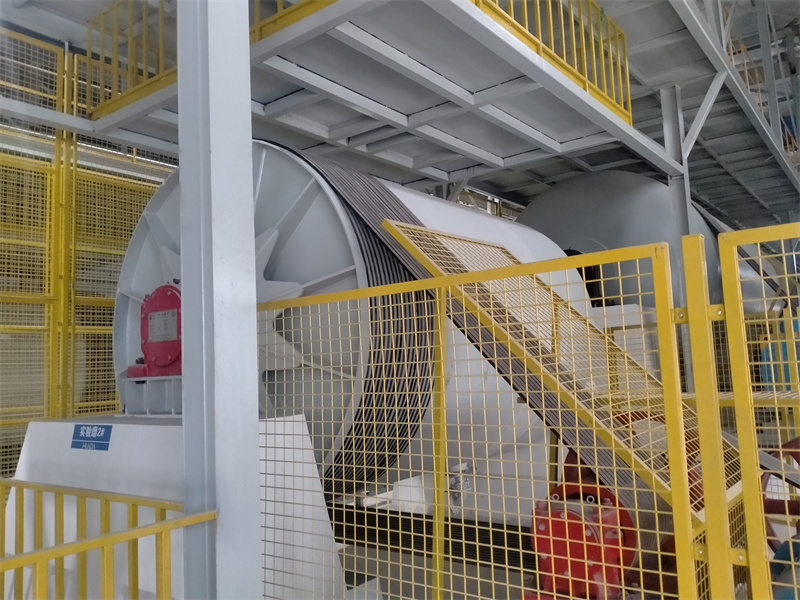
At the very beginning of the production line sits the foundational piece of grinding equipment. A heavy-duty Ball Mill consists of a horizontally mounted, rotating cylindrical chamber. To withstand relentless abrasion, these cylinders are lined with highly durable materials such as high-alumina bricks or specialized wear-resistant rubber. The cylinder is loaded to a specific volume with dense grinding media, typically alumina balls or ceramic cylinders.
As the massive cylinder rotates at its calculated critical speed, centrifugal force lifts the grinding media before allowing it to cascade violently down onto the raw materials. This continuous impact physically pulverizes coarse minerals and hardened clay aggregates into microscopic particles. Because water and deflocculants are added directly into the milling chamber, the grinding and liquid dispersion processes occur simultaneously. This creates a highly integrated base material ready for further refinement.
The particle size distribution within your fluid directly influences the structural integrity, surface smoothness, and firing behavior of the final product. If the milled particles remain too large, the heavier elements will settle rapidly. The fired ceramic will then exhibit a rough, porous, and structurally weak surface. In contrast, if the particles are milled excessively fine, the mixture may become overly sticky. This causes severe mold release issues and catastrophic shrinkage in the kiln.
A well-calibrated milling system provides operators with exact control over the micron size. By meticulously adjusting the milling duration, the ratio of grinding media to raw earth, and the rotational speed, engineers can produce a highly refined, uniform suspension tailored to their specific recipe.
Once the raw materials are adequately milled, the next critical phase is blunging. A blunger is a specialized mixing tank equipped with heavy-duty impellers and internal baffles. Its primary function is to rapidly disperse the solid clay particles into the water while seamlessly integrating the chemical deflocculants.
The aggressive mechanics of the impeller create a high-shear vortex that violently tears apart any remaining agglomerates. However, the design of a professional blunger is meticulously engineered to prevent atmospheric air from entering the mix. Standard propeller mixers often whip air directly into the liquid, creating a frothy, unusable layer. Industrial-grade blungers maintain a controlled flow pattern that actively pulls dry material down into the vortex while keeping the surface remarkably calm.
After the initial high-shear mixing is complete, the liquid must be aged and kept in a state of perfect suspension. Clay and mineral particles inherently possess different densities. If the fluid is left stagnant in a holding tank, the heavier particulate components will slowly precipitate to the bottom. This completely destroys the homogeneity of the batch.
To counteract this natural settling, continuous, low-speed agitation is mandatory. Integrating a dedicated Slip Preparation Machine utilizes low-RPM paddle mixers to keep the entire volume of liquid gently moving. This mechanical agitation prevents particle stratification and maintains the thixotropic properties of the fluid. By keeping the materials perfectly suspended without whipping new air into the mix, every mold on the casting line receives a chemically and physically identical batch.
Even after rigorous milling and high-shear blunging, the liquid is not immediately ready for the casting line. Organic debris, microscopic unmixed agglomerates, or degraded fragments of grinding media can occasionally bypass the initial mixing stages. To guarantee a silky-smooth casting medium, the fluid must pass through a strict mechanical filtration system.
Vibrating sieves, or gyro-screens, are integrated directly into the transfer lines. These machines force the thick liquid through fine stainless steel mesh screens, often ranging from 80 to 120 mesh. The high-frequency mechanical vibration prevents the viscous fluid from clogging the screen apertures. This efficiently separates out any oversized particles that would inevitably cause pinholes or localized stress fractures during firing.
Ferrous contamination remains one of the most persistent and damaging challenges in ceramic manufacturing. Even trace amounts of iron oxide will oxidize violently during the high-temperature kiln firing. This results in unsightly black spots, brown streaks, and structural weaknesses that lead to immediate product rejection.
To mitigate this invisible threat, advanced Ceramic Processing Equipment incorporates powerful magnetic separators. As the liquid flows through the production line, it passes over permanent rare-earth magnets or electromagnetic grids. These systems boast magnetic strengths that often exceed 8,000 Gauss. They pull microscopic iron particles directly out of the suspension, securing the pristine purity and whiteness of the final ceramic body.
Air entrainment is the primary culprit behind pinholing. This is a severe defect where tiny craters form on the surface of the fired piece, ruining its aesthetic appeal. Bubbles are inevitably introduced during fluid transfer phases.
Modern engineering addresses this issue through optimized paddle agitation and vacuum degassing technology. Vacuum mixers apply controlled negative pressure to the mixing chamber, forcing dissolved micro-bubbles to expand, rise, and dissipate harmlessly. Furthermore, specific blade geometries in storage tanks ensure that the liquid is gently folded rather than whipped. This actively degasses the mixture over several hours before it touches a plaster mold.
Casting slip exhibits thixotropic behavior. It flows freely under mechanical shear but will begin to gel and flocculate when left to rest undisturbed. If the fluid gels prematurely in the transfer pipes, it will cause uneven wall thickness and incomplete casts.
Automated machinery prevents this unwanted flocculation through continuous environmental and mechanical control. Temperature-controlled, double-jacketed tanks maintain a stable thermal environment, as cold temperatures severely exacerbate gelling. Automated stirring mechanisms operate on timed cycles, providing just enough kinetic energy to break the rigid gel structure and keep the clay platelets in a perfectly fluid state.
Selecting the correct machinery requires a rigorous evaluation of current output and future growth. The volumetric capacity of your mixing tanks and mills must align perfectly with daily production demands. A boutique studio might only require a 50-liter to 100-liter blunger. Meanwhile, an industrial sanitaryware plant demands continuous systems capable of processing thousands of liters per shift.
It is crucial to match the motor power to the tank size. An underpowered motor will fail to create the necessary vortex in a large tank, leading to incomplete mixing and eventual motor burnout. Always assess your peak production requirements to ensure your chosen equipment allows for scalable batch sizes without compromising shear efficiency.
The highly abrasive nature of liquid silica and clay demands robust construction materials. The continuous movement of these minerals will rapidly degrade inferior metals. Therefore, the construction materials of your contact surfaces are paramount.
Prioritize tanks and impeller shafts constructed from high-grade stainless steel, such as 304 or 316L. These resist both physical abrasion and chemical corrosion from alkaline deflocculants. For high-impact machinery, durable high-alumina linings are necessary to prevent the steel shell from contaminating the batch. Prioritizing machines with accessible drainage valves and standardized replacement parts yields significant long-term cost savings by minimizing maintenance downtime.
The journey of slip preparation is a meticulous, data-driven science that dictates the success of every subsequent step in ceramic manufacturing. From the precise pulverization of raw materials to the controlled, high-shear dispersion provided by dedicated storage tanks, mechanical intervention is absolutely non-negotiable for strict quality control.
High-quality processing machinery is not merely an operational expense. It is a critical, foundational investment in structural integrity, production yield, and long-term business scalability. By automating viscosity control, eliminating human error, and extracting hidden contaminants, manufacturers can drastically reduce defect rates. For facilities ready to eliminate casting defects and scale their output, upgrading your mixing and milling infrastructure is the first step. Visit HXG Machine to explore our full range of industrial-grade ceramic processing equipment and elevate your casting process to the highest level of operational excellence.
A blunger and a ball mill serve distinct but complementary functions. A blunger is essentially a high-speed industrial mixer used to blend and suspend pre-powdered clay and chemicals into water, creating a homogeneous liquid. It does not reduce the fundamental physical size of the particles. In contrast, a ball mill is a heavy-duty grinding machine. It utilizes rotational kinetic energy and grinding media to physically crush and pulverize coarse, raw minerals into a microscopic powder or directly into a fluid state.
The optimal mixing duration depends entirely on the specific clay recipe, the type of deflocculant used, and the ambient temperature of the facility. Typically, an initial high-shear mixing phase lasts between 4 to 24 hours to ensure complete deflocculation and hydration of the clay particles. Once this initial phase is complete, a dedicated preparation tank will utilize continuous, low-speed agitation to keep the mixture perfectly aged and degassed.
From a purely mechanical standpoint, many processing units are versatile enough to process both slip and glaze. However, in practical application, sharing equipment introduces a severe risk of cross-contamination. Glazes contain potent colorants and heavy fluxing oxides that can easily contaminate a pure white casting body, leading to disastrous firing defects. For optimal efficiency, facilities are strongly advised to invest in dedicated processing equipment for each specific material line.
Deflocculants, such as sodium silicate or Darvan, are vital chemical additives that fundamentally alter the rheology of the mixture. They modify the electrical charge on the surface of the microscopic clay particles, forcing them to repel one another rather than clumping together. This chemical repulsion allows the fluid to achieve a highly pourable state using a significantly reduced volume of water, minimizing shrinkage and cracking during the drying phase.
Temperature plays a massive role in the rheology of casting slip. Cold temperatures naturally increase the viscosity of the fluid, making it thicker and more prone to premature gelling before it fully fills the mold details. Conversely, excessively warm temperatures can cause the water to evaporate too quickly and alter the effectiveness of chemical deflocculants. Utilizing double-jacketed preparation tanks allows operators to maintain a stable, optimal thermal environment regardless of seasonal factory changes.
While the exact number varies based on the specific clay body and application, most industrial casting slips aim for a specific gravity between 1.70 and 1.85. This means the slip is roughly 1.7 to 1.85 times heavier than an equal volume of pure water. Hitting this precise target ensures that there is enough solid clay material to build a strong wall structure quickly, without introducing excess water that would degrade the plaster molds and cause severe shrinkage.


